Have you ever walked into a quiet forest and felt completely calm? Or have you stepped into a busy, noisy office and felt stressed? The places around us affect how we feel and act. In writing, we often call these places our “environment.” But if you write the word “environment” too many times, your readers might get bored. That is why finding good synonyms for environment is so important!
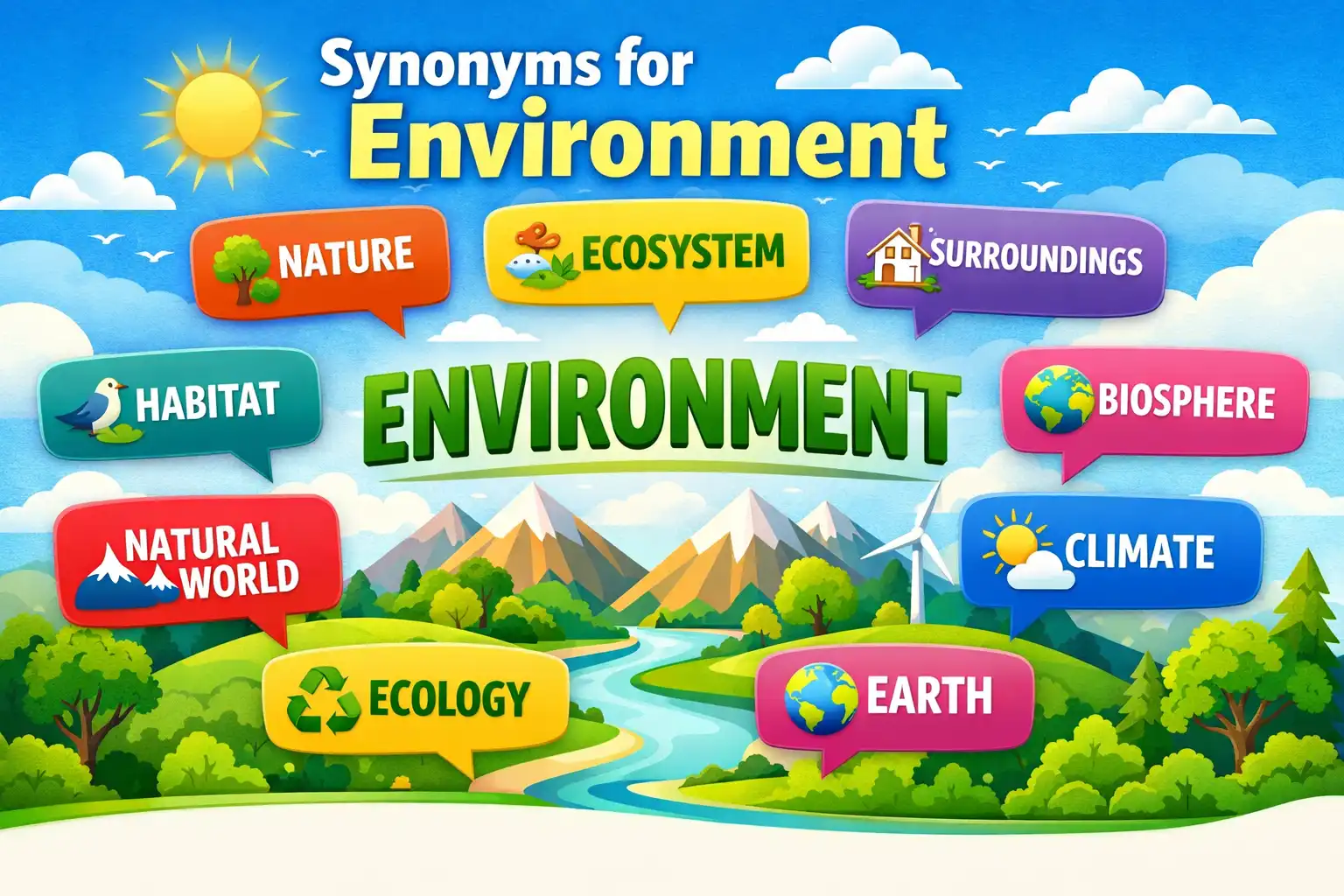
The phrase “synonyms for environment” means other words you can use to talk about the world or spaces around you. Learning these new words is highly useful for students, bloggers, content writers, and daily English users. It helps make your sentences sound fresh and exciting. By using different terms, you can easily paint a clear picture for your readers. Let us explore fifty wonderful synonyms for environment to help boost your writing today.
Surroundings
Meaning:
- This word means the physical things and spaces that are all around you.
Examples:
- She likes her new office and its clean surroundings.
- The birds live in quiet, natural surroundings.
Habitat
Meaning:
- This word means the natural home of a wild animal or plant.
Examples:
- The forest is the perfect habitat for bears.
- Frogs need a wet habitat to live and grow.
Nature
Meaning:
- This word means the physical world including plants, animals, and landscapes.
Examples:
- I love to spend my weekends out in nature.
- We must work hard to protect nature.
Setting
Meaning:
- This word means the place or time where something happens.
Examples:
- The cozy cabin was a perfect setting for the book.
- This quiet restaurant is a great setting for our talk.
Atmosphere
Meaning:
- This word means the general mood or feeling of a place.
Examples:
- The party had a very happy and fun atmosphere.
- I do not like the tense atmosphere in this room.
Climate
Meaning:
- This word means the general weather or emotional mood of a place over time.
Examples:
- The warm climate here is great for growing fruit.
- The company has a very friendly work climate.
Context
Meaning:
- This word means the situation or facts that surround an event.
Examples:
- You must look at the whole context to understand his words.
- This picture makes more sense in its original context.
Milieu
Meaning:
- This word means the social setting that a person lives or works in.
Examples:
- She grew up in a very creative artistic milieu.
- He feels comfortable in a high-tech milieu.
Locality
Meaning:
- This word means a specific area, neighborhood, or district.
Examples:
- Many rare plants grow in this wet locality.
- We want to build a new park in our locality.
Territory
Meaning:
- This word means an area of land that belongs to a person, group, or animal.
Examples:
- Wolves will fight to protect their territory.
- This part of the woods is unknown territory to us.
Domain
Meaning:
- This word means an area of land or knowledge that someone controls.
Examples:
- The king ruled over a very large domain.
- Computers are the main domain of his work.
Area
Meaning:
- This word means a part of a town, country, or space.
Examples:
- There is a nice play area for kids in the park.
- We moved to a very quiet area of the city.
Background
Meaning:
- This word means the scene or situation that lies behind the main things.
Examples:
- You can see tall mountains in the background of the photo.
- His family background helped him love music.
Landscape
Meaning:
- This word means everything you can see when you look across an area of land.
Examples:
- The green hills made the landscape look beautiful.
- Dust and rocks filled the dry landscape.
Scene
Meaning:
- This word means the place where an action or event occurs.
Examples:
- The police arrived fast at the scene of the accident.
- It was a peaceful scene with sheep on the grass.
Region
Meaning:
- This word means a large area of land that is different from others.
Examples:
- This region gets a lot of snow in the winter.
- Grapes grow very well in this warm region.
Terrain
Meaning:
- This word means the physical features of a stretch of land.
Examples:
- The rocky terrain made it hard to walk.
- They drove their truck over the rough terrain.
Zone
Meaning:
- This word means an area that has a special use or rule.
Examples:
- You must drive slowly in the school zone.
- The kids made a fun safety zone in the yard.
Locale
Meaning:
- This word means a place where something special happens or is set.
Examples:
- The beach was the perfect locale for their wedding.
- They chose a dark forest as the locale for the movie.
Situation
Meaning:
- This word means the set of things happening at a certain place and time.
Examples:
- He kept a calm mind in a very hard situation.
- Our current living situation is very comfortable.
Element
Meaning:
- This word means the natural place where a person or animal is happiest.
Examples:
- The wild fish is in its element in the deep river.
- She is in her element when she is painting.
Conditions
Meaning:
- This word means the state of things around you that affect your life.
Examples:
- The workers asked for better conditions at the shop.
- We had to drive in very bad weather conditions.
Sphere
Meaning:
- This word means an area of life, interest, or activity.
Examples:
- He has a lot of power in the political sphere.
- We must keep our work and family sphere separate.
World
Meaning:
- This word means the whole earth or a specific area of life.
Examples:
- She wants to travel and see the whole world.
- The book takes you into the world of magic.
Biosphere
Meaning:
- This word means the parts of the earth where life can exist.
Examples:
- All plants and animals live together in the biosphere.
- We must protect our biosphere from bad trash.
Location
Meaning:
- This word means a specific place where someone or something is.
Examples:
- The map shows the exact location of the treasure.
- Our new house is in a great location near the school.
Backdrop
Meaning:
- This word means the general scene that sits behind an event.
Examples:
- The sunset was a lovely backdrop for our photo.
- The old town served as a backdrop for the story.
Place
Meaning:
- This word means a particular area, building, or spot.
Examples:
- This is my favorite place to read books.
- She needs a safe place to store her bike.
Sector
Meaning:
- This word means a specific part of an area or activity.
Examples:
- He works in the business sector of the city.
- The public sector helps keep the streets clean.
Realm
Meaning:
- This word means a kingdom or a specific area of interest.
Examples:
- The king came back to his beautiful realm.
- She loves to read about the realm of science.
Framework
Meaning:
- This word means the basic structure that supports a system or plan.
Examples:
- We need a solid framework to start our project.
- The laws give a good framework for our safety.
Vicinity
Meaning:
- This word means the area near or around a specific place.
Examples:
- There are three good schools in our vicinity.
- He lives in the general vicinity of the park.
Biome
Meaning:
- This word means a large natural area with its own plants and animals.
Examples:
- The hot desert is a very dry biome.
- Many tall trees grow in the rain forest biome.
Outdoors
Meaning:
- This word means the space outside of buildings and houses.
Examples:
- The kids love to play in the great outdoors.
- We spent the whole afternoon in the fresh outdoors.
Space
Meaning:
- This word means an empty or open area that can be used.
Examples:
- There is plenty of space for your bag here.
- She wanted some personal space to think.
Environs
Meaning:
- This word means the surrounding areas, especially around a city.
Examples:
- We went for a walk in the beautiful environs of the town.
- The city and its environs have many nice parks.
Workplace
Meaning:
- This word means the office, shop, or site where you do your job.
Examples:
- She tries to keep her workplace clean and neat.
- We want a safe and happy workplace for everyone.
Culture
Meaning:
- This word means the shared ideas, habits, and feelings of a group.
Examples:
- Our school has a very supportive learning culture.
- He loves the busy culture of the big city.
Field
Meaning:
- This word means an open area of land or a subject of study.
Examples:
- The cows are eating grass in the green field.
- She is a top expert in the field of science.
System
Meaning:
- This word means a set of things working together as a whole.
Examples:
- The water system in the house is very old.
- A healthy body has a good defense system against germs.
Clime
Meaning:
- This word means a place with a specific type of climate or weather.
Examples:
- They left the cold winter for a warmer clime.
- I would love to live in a sunny tropical clime.
Aura
Meaning:
- This word means a special feeling or mood that surrounds a person or place.
Examples:
- The old church had a quiet and peaceful aura.
- She has a very bright aura that makes people smile.
Vibe
Meaning:
- This word means the simple mood or energy you feel from a place or person.
Examples:
- This small coffee shop has a very cool vibe.
- I got a bad vibe from that dark street.
Home
Meaning:
- This word means the place where a person, animal, or plant lives.
Examples:
- The deep ocean is the home of many blue whales.
- I am always happy to return to my cozy home.
Range
Meaning:
- This word means the area where an animal lives or travels.
Examples:
- The wild sheep have a very wide mountain range.
- This forest is part of the grizzly bear’s natural range.
Microclimate
Meaning:
- This word means the climate of a very small and specific area.
Examples:
- The valley has its own warm and wet microclimate.
- Plants grow well in the unique microclimate of the greenhouse.
Ecosystem
Meaning:
- This word means all the plants, animals, and soil working together in an area.
Examples:
- Even a small pond has its own busy ecosystem.
- Pollution can cause great harm to the ocean ecosystem.
Ecology
Meaning:
- This word means the relationships between living things and their surroundings.
Examples:
- We study ecology to see how birds help trees grow.
- The oil spill did terrible damage to the local ecology.
Medium
Meaning:
- This word means the substance or surroundings in which something lives or grows.
Examples:
- Water is the natural medium for fish to swim in.
- Soil is the perfect medium for plants to grow roots.
Wild
Meaning:
- This word means a natural place that is not controlled by humans.
Examples:
- It is exciting to see big animals out in the wild.
- Many beautiful flowers grow in the deep wild.
Why Learning Synonyms Improves Your Writing
Learning synonyms for environment is a fantastic way to boost your writing, blogging, speaking, and everyday communication. When you swap out repetitive words, your sentences instantly sound fresh and keep readers hooked. We encourage you to practice using these fifty options in your next emails, school essays, and daily conversations. You will see how simple it is to make your English feel more alive, clear, and highly professional!

Robert Hayes is an ESL educator and curriculum developer with over nine years of experience teaching English to beginners and intermediate learners across multiple countries ( Biography ).