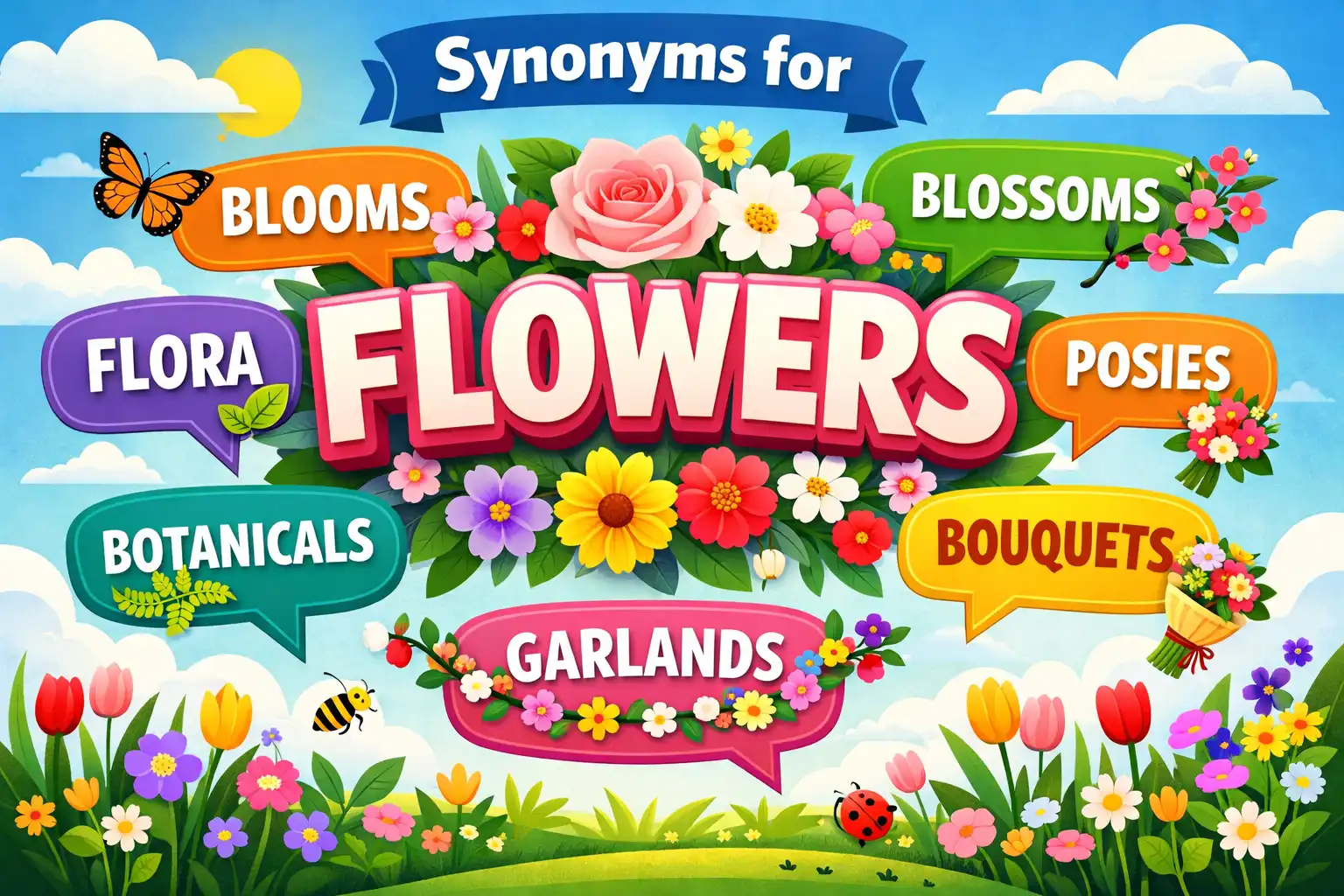
Have you ever walked into a room and smelled the sweet scent of fresh roses? It instantly makes you feel happy, relaxed, and connected to nature. Flowers are the colorful, beautiful parts of plants that grow and make seeds. But using the exact same word over and over can make your writing feel very boring and repetitive.
Are you looking for the best synonyms for flowers to boost your writing skills? Knowing a variety of synonyms for flowers is highly useful for everyone. Students can get better grades on school essays. Bloggers and content writers can make their articles much more exciting to read. Daily English users can express themselves clearly in chat. Let us explore these fifty amazing synonyms for flowers!
1. Blossoms
Meaning: These are the colorful flowers that grow on trees or bushes.
Examples:
- The apple tree has pretty pink blossoms.
- I like to collect fallen blossoms from the grass.
2. Blooms
Meaning: This word describes flowers that are open and fully grown.
Examples:
- The red blooms in the garden look very bright today.
- She put the fresh blooms in a tall glass vase.
3. Florets
Meaning: These are the very small individual flowers that grow in a tight cluster.
Examples:
- The broccoli head is made of tiny green florets.
- You can see small yellow florets on the sunflower.
4. Buds
Meaning: These are young flowers that have not opened up yet.
Examples:
- The rose buds will open in a few days.
- I saw tiny green buds on the tree branches.
5. Flora
Meaning: This is a word for all the plants and flowers in a specific area.
Examples:
- The desert has very unique and tough flora.
- We love to study the local mountain flora.
6. Botanicals
Meaning: These are substances or parts that come directly from plants and flowers.
Examples:
- This shampoo is made with natural botanicals.
- She loves drawing beautiful botanicals in her notebook.
7. Posies
Meaning: These are small and sweet-smelling bunches of flowers.
Examples:
- The children gathered small posies for their mother.
- She tied the colorful posies with a blue ribbon.
8. Nosegays
Meaning: These are tiny, sweet bunches of flowers that people hold in their hands.
Examples:
- The bridesmaids carried delicate nosegays down the aisle.
- He gifted her a sweet nosegay of wild herbs.
9. Bouquets
Meaning: These are large, pretty groups of cut flowers tied together.
Examples:
- The flower shop sells beautiful bouquets of lilies.
- We received three big bouquets for our anniversary.
10. Corsages
Meaning: These are small flowers that people pin to their clothes for special parties.
Examples:
- The students wore colorful corsages to the high school dance.
- My grandmother pinned the orchid corsage to her dress.
11. Boutonnieres
Meaning: This is a single flower worn on the lapel of a suit jacket.
Examples:
- The groom wore a white rose boutonniere.
- We bought matching boutonnieres for the wedding party.
12. Garlands
Meaning: These are long ropes or chains made of flowers and leaves.
Examples:
- They hung colorful flower garlands across the front door.
- The dancers wore beautiful jasmine garlands around their necks.
13. Wreaths
Meaning: These are circles made of flowers and leaves that people hang up.
Examples:
- We made holiday wreaths out of pine and red flowers.
- She hung a wreath of daisies on the wall.
14. Sprays
Meaning: These are stems of flowers arranged in a flat, wide shape.
Examples:
- The table was decorated with lovely fern sprays.
- They placed large sprays of gladiolus near the stage.
15. Wildflowers
Meaning: These are flowers that grow naturally in fields without help from people.
Examples:
- We picked a bunch of yellow wildflowers on our hike.
- The open fields are full of bright wildflowers.
16. Petals
Meaning: These are the soft, colorful outer parts of a flower.
Examples:
- Soft flower petals fell onto the garden path.
- He gently touched the velvety rose petals.
17. Inflorescences
Meaning: This is the scientific word for a complete flower cluster on a plant.
Examples:
- The lavender plant has long, beautiful inflorescences.
- Scientists study the different shapes of plant inflorescences.
18. Annuals
Meaning: These are flowers that live and bloom for only one year.
Examples:
- Marigolds are very popular annuals for summer gardens.
- We plant new annuals every single spring.
19. Perennials
Meaning: These are flowers that grow back every year without being replanted.
Examples:
- Hostas are great perennials that love the shade.
- These purple perennials come back bigger every summer.
20. Sprigs
Meaning: These are small twigs or shoots with leaves and flowers on them.
Examples:
- She added a few sprigs of lavender to the tea.
- He placed fresh sprigs of mint in the lemonade.
21. Shoots
Meaning: These are new, young green parts growing out of the ground.
Examples:
- Green shoots are finally coming out of the cold dirt.
- The bamboo shoots grow very fast in the rain.
22. Sprouts
Meaning: These are tiny, newly born plants just starting to grow from seeds.
Examples:
- I can see tiny bean sprouts in the garden.
- The seeds will turn into green sprouts very soon.
23. Seedlings
Meaning: These are very young plants that have grown from seeds.
Examples:
- We kept the tomato seedlings warm inside the house.
- It is time to plant the flower seedlings outside.
24. Plants
Meaning: These are living green things that have roots, leaves, and sometimes flowers.
Examples:
- You need to water these green plants every morning.
- My room is full of beautiful leafy plants.
25. Greenery
Meaning: These are green leaves and plants used to make a place look pretty.
Examples:
- The wedding tables were covered in beautiful forest greenery.
- We added some fresh greenery to the flower bouquet.
26. Foliage
Meaning: This word means all the leaves of a plant or tree together.
Examples:
- The autumn foliage turned bright red and orange.
- This plant is grown for its thick, shiny foliage.
27. Vegetation
Meaning: This is a general word for all the green plants in an area.
Examples:
- The tropical island has very thick green vegetation.
- Animals love to eat the fresh green vegetation.
28. Herbs
Meaning: These are small plants used for cooking, medicine, or sweet smells.
Examples:
- We grow fresh herbs like basil on the windowsill.
- She uses dried herbs to make organic tea.
29. Shrubs
Meaning: These are woody plants that are smaller than trees and have many branches.
Examples:
- We planted flowering shrubs along the garden fence.
- The green shrubs need to be trimmed this weekend.
30. Bushes
Meaning: These are thick, low-growing plants with many green leaves and stems.
Examples:
- The rose bushes are full of red flowers.
- Small birds love to hide in the thick bushes.
31. Evergreens
Meaning: These are plants and trees that stay green all year long.
Examples:
- The tall evergreens look beautiful in the white snow.
- We planted small evergreens near the front door.
32. Exotics
Meaning: These are rare, colorful flowers that come from warm, tropical places.
Examples:
- The greenhouse is full of rare tropical exotics.
- She loves to paint bright exotics from the rainforest.
33. Wildings
Meaning: These are plants or flowers that grow wild instead of being cultivated.
Examples:
- We found sweet wildings growing along the old road.
- The forest is home to many delicate wildings.
34. Clusters
Meaning: These are groups of flowers or fruits that grow close together.
Examples:
- I saw beautiful clusters of purple grapes on the vine.
- The lilac bush has sweet-smelling flower clusters.
35. Cut flowers
Meaning: These are fresh flowers that have been cut to put in a vase.
Examples:
- She bought some colorful cut flowers at the market.
- Cut flowers need fresh water to stay alive.
36. Houseplants
Meaning: These are green plants grown inside homes or offices for decoration.
Examples:
- Having houseplants makes the living room feel cozy.
- He waters his leafy houseplants every single Friday.
37. Succulents
Meaning: These are thick, fleshy plants that can hold water and sometimes bloom.
Examples:
- Succulents are very easy to take care of indoors.
- The little green succulents look great on my desk.
38. Groundcover
Meaning: These are low plants that grow fast and cover the bare dirt.
Examples:
- We planted green groundcover to stop the soil from washing away.
- The flowering groundcover made the hill look like a purple carpet.
39. Vines
Meaning: These are climbing plants that have long, thin stems and pretty flowers.
Examples:
- Sweet jasmine vines climbed up the wooden trellis.
- We watched the green vines grow over the stone wall.
40. Creepers
Meaning: These are plants that grow and spread slowly along the ground.
Examples:
- The green creepers covered the old garden path.
- I saw tiny flowers growing on the wild creepers.
41. Climbers
Meaning: These are strong plants that naturally grow upward on walls or fences.
Examples:
- These rose climbers look amazing on the garden archway.
- Ivy climbers covered the entire side of the brick house.
42. Blossomers
Meaning: These are any plants or trees that produce pretty blossoms.
Examples:
- Spring is the best time to see the beautiful blossoms.
- Those pink blossomers make the park look so lovely.
43. Floral designs
Meaning: These are artistic arrangements of flowers put together for decoration.
Examples:
- The designer created beautiful floral designs for the party.
- I love looking at modern floral designs in magazines.
44. Centerpieces
Meaning: These are flower arrangements placed in the middle of dinner tables.
Examples:
- The wedding centerpieces were made of white roses.
- She put low candle centerpieces on the party tables.
45. Pot plants
Meaning: These are flowers or green plants grown inside clay or plastic pots.
Examples:
- We lined up the colorful pot plants on the balcony.
- She gave me two lovely pot plants for my birthday.
46. Bedding plants
Meaning: These are young flowers planted in garden beds for seasonal color.
Examples:
- We bought flat boxes of bedding plants for the yard.
- These bright bedding plants will look great all summer.
47. Seed-bearers
Meaning: These are mature flowering plants that create seeds to grow new plants.
Examples:
- The tall seed-bearers attract many birds to the yard.
- We let the flower seed-bearers dry out in autumn.
48. Shrubbery
Meaning: This is a word for a group of shrubs and bushes growing together.
Examples:
- The gardener trimmed the green shrubbery around the house.
- We ran past the thick shrubbery to catch the ball.
49. Undergrowth
Meaning: These are low-growing plants and flowers beneath the trees in a forest.
Examples:
- We walked carefully through the thick forest undergrowth.
- Many small animals live safe inside the green undergrowth.
50. Brambles
Meaning: These are wild, thorny bushes that produce sweet berries and small flowers.
Examples:
- We picked sweet blackberries from the wild brambles.
- Be careful of the sharp thorns on those forest brambles.
Conclusion
Learning different synonyms for flowers is a fantastic way to improve your writing, blogging, and speaking. When you use a variety of words, your communication becomes much stronger, more descriptive, and far more interesting. We encourage you to practice these fifty words in your next school essays, work emails, and daily conversations. The more you use them, the more natural they will feel. Keep practicing and watch your English vocabulary bloom!

Robert Hayes is an ESL educator and curriculum developer with over nine years of experience teaching English to beginners and intermediate learners across multiple countries ( Biography ).