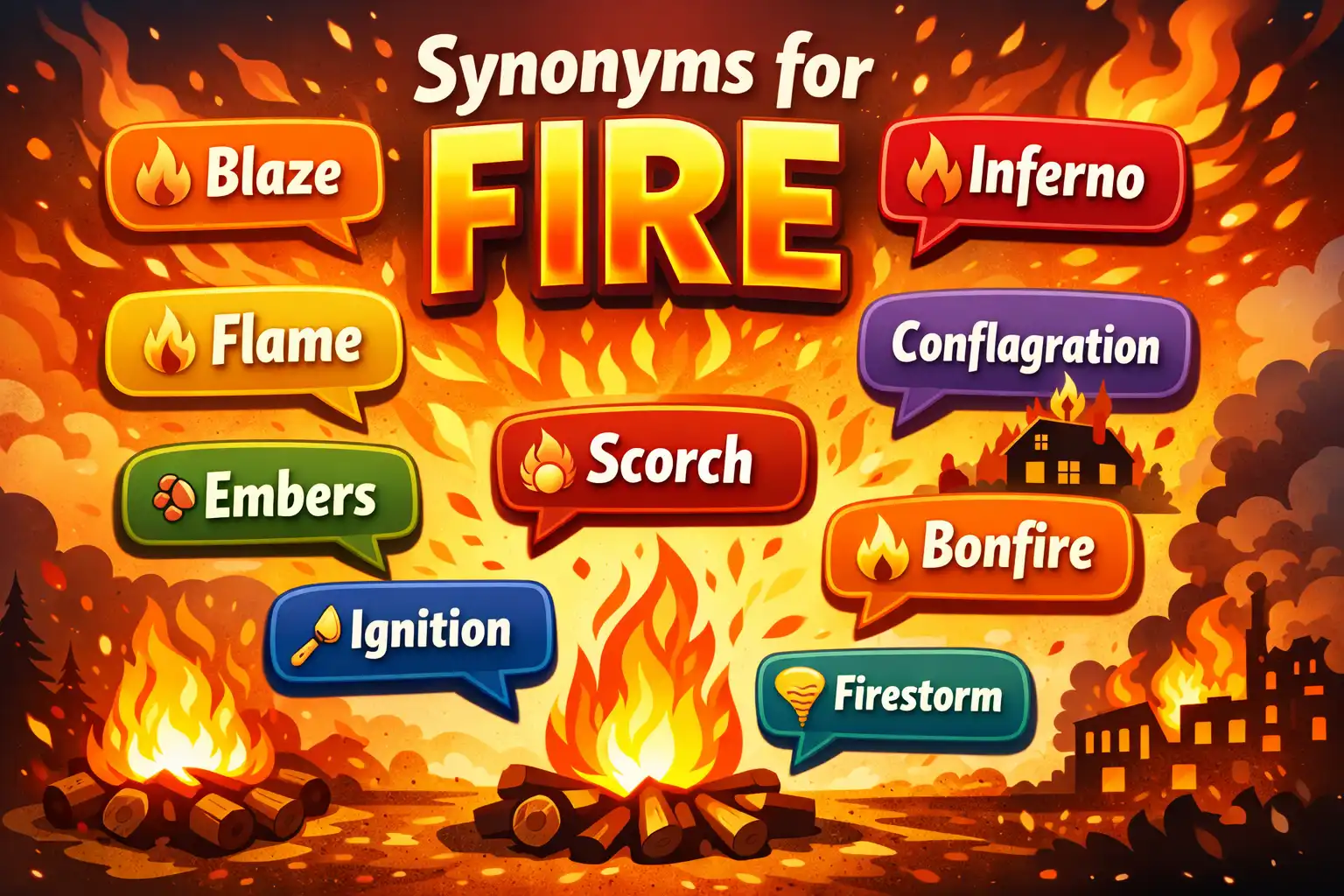
Have you ever sat by a crackling campfire on a cold night and watched the bright orange light dance? It is a warm and cozy feeling. But if you keep using the same word to describe this warm glow, your writing can quickly become dull. Are you searching for the best synonyms for fire to make your essays or stories pop?
A fire is simply heat and light that comes from something burning. Learning different synonyms for fire is highly useful for everyone. Students can get better grades on their English homework. Bloggers and content writers can paint vivid pictures for their readers. Daily English users can express themselves with more variety in chats. Let us explore these fifty great words!
1. Blaze
Meaning: A very large and bright burning light.
Examples:
- The firemen worked hard to put out the sudden house blaze.
- We could see the bright blaze from miles away.
2. Flame
Meaning: A single hot stream of bright burning gas.
Examples:
- She lit a small match and watched the tiny yellow flame.
- Keep your hand away from the candle flame.
3. Inferno
Meaning: A huge and dangerous fire that is out of control.
Examples:
- The dry forest quickly turned into a raging inferno.
- Firefighters rushed to save the building from the hot inferno.
4. Wildfire
Meaning: A large fire that spreads very fast across fields or woods.
Examples:
- The hot wind made the wildfire spread across the hills.
- Always put out your campfire to prevent a dangerous wildfire.
5. Bonfire
Meaning: A large outdoor fire made for fun, warmth, or celebration.
Examples:
- We gathered around the big bonfire to sing songs.
- They burned dry branches in a neat backyard bonfire.
6. Spark
Meaning: A tiny, glowing piece of hot coal or wood that flies up.
Examples:
- A tiny spark from the grill landed on the dry grass.
- Watch the bright spark fly up into the dark sky.
7. Ember
Meaning: A hot, glowing piece of wood left after a fire dies down.
Examples:
- The red ember kept us warm long after the logs burned.
- He used a stick to poke the last glowing ember.
8. Glow
Meaning: A soft and steady light that comes from something hot.
Examples:
- We loved the warm glow of the heater in the winter.
- The sunset left a beautiful orange glow in the room.
9. Heat
Meaning: The warm or hot feeling that comes from energy or burning.
Examples:
- You can feel the intense heat when you stand close.
- The summer sun sends down a lot of strong heat.
10. Warmth
Meaning: A gentle and pleasant level of heat.
Examples:
- The blanket gave her a nice sense of warmth.
- We sat close to the stove to enjoy its quiet warmth.
11. Flare
Meaning: A sudden and brief burst of bright light.
Examples:
- The lost hiker used a red flare to signal for help.
- We saw a sudden flare of light in the dark forest.
12. Flash
Meaning: A very quick and bright shine of light.
Examples:
- A bright flash of lightning lit up the dark bedroom.
- The camera made a sudden flash when she took the photo.
13. Flicker
Meaning: A light that shines unsteadily or goes on and off quickly.
Examples:
- We saw the tiny candle flicker in the drafty room.
- The street lamp started to flicker before it went out.
14. Coal
Meaning: A black rock that burns hot and keeps a fire going.
Examples:
- He put another heavy piece of coal into the stove.
- The red-hot coal cooked our food on the grill.
15. Light
Meaning: The bright energy that lets us see things clearly.
Examples:
- Please turn on the light so I can read my book.
- The morning light came softly through the open window.
16. Burn
Meaning: To damage, hurt, or heat something with fire.
Examples:
- Be careful not to burn the toast in the morning.
- The sun can burn your skin if you stay out too long.
17. Ignite
Meaning: To set something on fire or start it burning.
Examples:
- You can use a small match to ignite the gas stove.
- Dry leaves will ignite quickly if a spark touches them.
18. Kindle
Meaning: To start a fire by lighting small pieces of wood.
Examples:
- We need to find dry twigs to kindle the campfire.
- He used old paper to kindle the logs in the hearth.
19. Torch
Meaning: A portable stick with a flame used for light.
Examples:
- The guide held a bright torch to light the dark cave.
- They carried a burning torch during the night walk.
20. Scorch
Meaning: To burn the surface of something slightly.
Examples:
- The hot iron will scorch your shirt if left too long.
- High heat can scorch the bottom of the cooking pan.
21. Singe
Meaning: To burn only the very edges or hairs of something.
Examples:
- She did singe her eyebrows when she got too close.
- The hot grill can singe the fabric of your sleeve.
22. Char
Meaning: To burn something until it turns black like charcoal.
Examples:
- The campfire will char the wood until it is black.
- I like to slightly char the peppers for extra flavor.
23. Dismiss
Meaning: To tell an employee that they no longer have a job.
Examples:
- The manager had to dismiss the worker for being late.
- They decided to dismiss the team after the project ended.
24. Sack
Meaning: To dismiss someone from their job suddenly.
Examples:
- The boss had to sack the lazy worker yesterday.
- If you do not follow rules, they might sack you.
25. Terminate
Meaning: To bring a job contract or agreement to an end.
Examples:
- The company will terminate his contract next month.
- They had to terminate her employment due to bad behavior.
26. Discharge
Meaning: To officially let someone leave a job or military service.
Examples:
- The hospital will discharge the healthy patient today.
- He got an honorable discharge from the army.
27. Boot
Meaning: To force someone to leave a job or group.
Examples:
- The coach decided to boot the player off the team.
- They will boot you out of the club if you fight.
28. Shoot
Meaning: To fire a gun, arrow, or bullet at a target.
Examples:
- The hunter had to shoot at the target for practice.
- He learned how to shoot an arrow in camp.
29. Launch
Meaning: To send a rocket or missile up into the air.
Examples:
- They will launch the space rocket tomorrow morning.
- The kids love to launch toy planes in the park.
30. Detonate
Meaning: To explode or cause a bomb to blow up.
Examples:
- The workers had to detonate the dynamite safely.
- The bomb squad will detonate the old device.
31. Blast
Meaning: A sudden and loud explosion or gust of wind.
Examples:
- We heard a loud blast from the construction site.
- A blast of cold air hit my face when I opened the door.
32. Explosion
Meaning: A sudden bursting with a loud noise and bright light.
Examples:
- The fireworks made a giant colorful explosion in the sky.
- An explosion of dust came out of the old bag.
33. Passion
Meaning: A very strong feeling of love, anger, or excitement.
Examples:
- She plays the piano with a lot of deep passion.
- His passion for painting started when he was young.
34. Zeal
Meaning: Great energy or enthusiasm for a cause or activity.
Examples:
- The young student worked with amazing zeal and focus.
- He showed great zeal for helping poor animals.
35. Fervor
Meaning: Very strong and sincere beliefs or feelings.
Examples:
- The crowd cheered with true fervor for their home team.
- She spoke about her new book with great fervor.
36. Spirit
Meaning: The lively and active energy that a person has.
Examples:
- Our team has a very bright and happy spirit today.
- She showed a strong spirit even when times were hard.
37. Energy
Meaning: The power and drive to do active things.
Examples:
- Children have a lot of energy to run around all day.
- I need a cup of hot coffee to get some energy.
38. Enthusiasm
Meaning: A strong feeling of excitement and interest in something.
Examples:
- The kids showed great enthusiasm for the school trip.
- He answered the teacher’s question with true enthusiasm.
39. Drive
Meaning: A strong inner desire to succeed and do well.
Examples:
- Her inner drive helped her win the gold medal.
- You need a lot of drive to start your own business.
40. Intensity
Meaning: The quality of being very strong, loud, or bright.
Examples:
- The intensity of the midday sun made us look away.
- He spoke with great intensity about his plans.
41. Pyre
Meaning: A large pile of wood used for burning a body.
Examples:
- Historically, people built a pyre for royal ceremonies.
- They gathered dry logs to construct the ancient pyre.
42. Conflagration
Meaning: A very large, destructive, and damaging fire.
Examples:
- The historic conflagration destroyed many old wooden houses.
- It took three days to stop the terrible conflagration.
43. Hearth
Meaning: The brick floor of a fireplace that keeps a room warm.
Examples:
- The cat fell asleep on the warm stone hearth.
- We sat close to the hearth to stay cozy.
44. Fireplace
Meaning: A safe place in a wall made for holding a fire.
Examples:
- They built a stone fireplace in their living room.
- We put fresh dry logs into the brick fireplace.
45. Grate
Meaning: A metal frame used to hold wood or coal inside a fireplace.
Examples:
- He cleaned the black ash from the iron grate.
- Place the heavy logs on top of the fireplace grate.
46. Sparkle
Meaning: To shine brightly with a lot of tiny flashes of light.
Examples:
- The clean diamonds sparkle under the store lamps.
- Watch the snow sparkle in the bright morning sun.
47. Glimmer
Meaning: A faint, weak, and unsteady light.
Examples:
- We saw a tiny glimmer of light through the trees.
- There is still a glimmer of hope for our team.
48. Radiance
Meaning: A glowing, bright, and happy light.
Examples:
- The gold crown shone with amazing radiance.
- We loved the natural radiance of her happy smile.
49. Beam
Meaning: A straight and long line of light.
Examples:
- The heavy flashlight threw a strong beam into the dark.
- A beam of bright sunlight woke me up.
50. Incinerate
Meaning: To burn something completely until only ash is left.
Examples:
- The high heat will incinerate the dry waste quickly.
- They use special ovens to incinerate medical trash.
Conclusion
Using different synonyms for fire is a wonderful way to lift your writing, blogging, and daily speech. When you use descriptive words, your sentences sound much more alive and interesting. We encourage you to practice using these fifty words in your school essays, work emails, and chats. The more you try them out, the easier writing will become. Keep practicing and watch your English vocabulary grow!

Robert Hayes is an ESL educator and curriculum developer with over nine years of experience teaching English to beginners and intermediate learners across multiple countries ( Biography ).