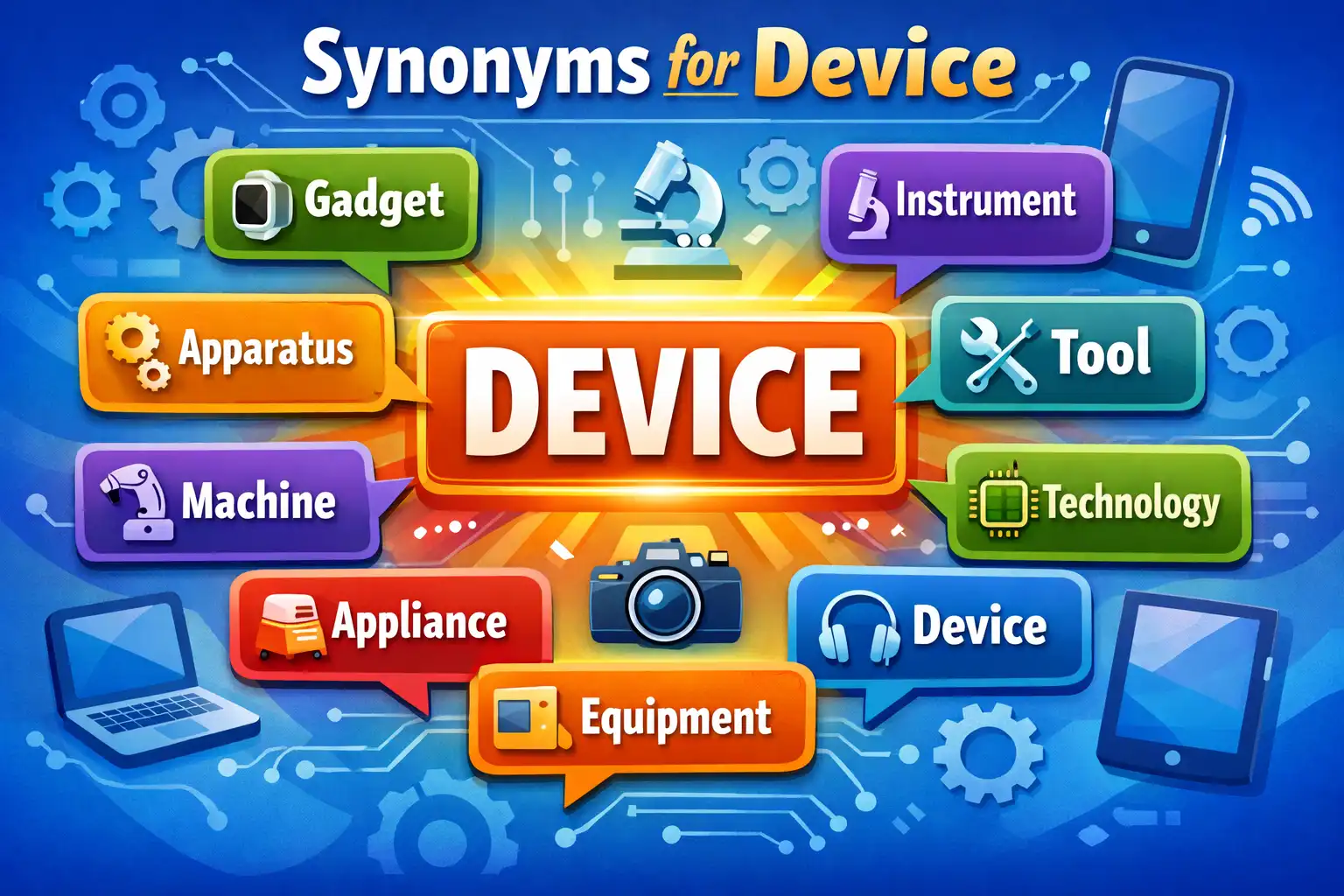
Have you ever tried to describe your smartphone, tablet, or computer but felt tired of using the same basic words? Imagine writing a blog post about technology and typing the word “device” five times in a single paragraph. Repeating the same word makes your writing feel dull and unoriginal.
That is why learning synonyms for device is so important. In simple English, a device is a tool or machine built for a special job. It is like a key that helps you unlock a specific task.
Using different synonyms for device helps your ideas sound clear and interesting. This guide is perfect for students writing school essays, bloggers reviewing new tech, content writers doing SEO work, and anyone wanting to improve their daily English. Let us look at fifty wonderful synonyms for device to boost your writing power today!
1. Gadget
Meaning: A small, useful tool or electronic machine. Examples:
- I bought a new kitchen gadget to slice apples.
- This handy gadget keeps my keys from getting lost.
2. Tool
Meaning: An object you hold in your hand to do a job. Examples:
- He used a heavy tool to fix the broken door.
- A hammer is a common tool for building things.
3. Instrument
Meaning: A precise tool used for scientific work or making music. Examples:
- The scientist used a special instrument to look at the stars.
- She enjoys playing a musical instrument after school.
4. Appliance
Meaning: An electrical machine used to do tasks in the home. Examples:
- The kitchen appliance made it easy to blend the soup.
- We bought a new appliance to wash our dirty clothes.
5. Machine
Meaning: A piece of equipment with moving parts that does work. Examples:
- The giant machine printed hundreds of books in an hour.
- This sewing machine helps her make beautiful dresses.
6. Apparatus
Meaning: A set of tools or equipment used for a specific task. Examples:
- The firemen wore a breathing apparatus in the smoky building.
- We set up the science apparatus on the school desk.
7. Gear
Meaning: The set of clothes or tools used for an activity. Examples:
- He packed his camping gear into a large backpack.
- You need protective gear to ride a fast motorcycle.
8. Utensil
Meaning: A simple tool used for cooking or eating food. Examples:
- A fork is a useful utensil for eating noodles.
- She washed every wooden utensil in the kitchen sink.
9. Implement
Meaning: A solid tool used to do outdoor or farm work. Examples:
- The farmer bought a sharp implement to dig the soil.
- A spade is an important implement for gardening.
10. Contraption
Meaning: A strange or complex machine that looks unusual. Examples:
- He built a funny contraption to feed his dog.
- The old contraption made a loud noise when it started.
11. Mechanism
Meaning: The moving parts inside a machine that make it work. Examples:
- The clock mechanism stopped working because of the dust.
- This lock has a simple mechanism that is easy to fix.
12. Equipment
Meaning: The group of items needed to do an activity or job. Examples:
- The gym has great equipment for exercising.
- You must wear the right safety equipment at the building site.
13. Gizmo
Meaning: A fun, informal word for a small machine or tool. Examples:
- What does this little plastic gizmo do?
- He showed us a cool gizmo that lights up in the dark.
14. Widget
Meaning: A small, unnamed tool or a small part of a computer program. Examples:
- The factory makes a metal widget for car engines.
- I added a weather widget to my phone screen.
15. Accessory
Meaning: An extra item that helps a main machine work better. Examples:
- This camera accessory allows you to take photos underwater.
- He bought a useful accessory for his laptop computer.
16. Invention
Meaning: A brand new machine or design created for the first time. Examples:
- The electric light was a wonderful invention for the world.
- She hopes her new invention will help clean the oceans.
17. Rig
Meaning: A special set of tools or machines built for a job. Examples:
- The oil rig operated out in the deep blue ocean.
- He set up a camera rig to shoot the movie scene.
18. Engine
Meaning: A machine that uses power to create movement. Examples:
- The car engine started with a loud roar.
- Engineers worked all day to fix the train engine.
19. Hardware
Meaning: The physical tools, machines, or computer parts you can touch. Examples:
- We bought metal nails and hammers at the hardware store.
- The computer needs new hardware to run the fast game.
20. Handset
Meaning: The physical part of a phone that you hold in your hand. Examples:
- He picked up the telephone handset to make a call.
- The wireless handset has a very clear sound.
21. Terminal
Meaning: A computer screen and keyboard used to enter data. Examples:
- The clerk typed the ticket number into the terminal.
- Every worker has a small computer terminal on their desk.
22. Sensor
Meaning: A tool that detects changes in light, heat, or movement. Examples:
- The motion sensor turned on the outdoor lights when I walked past.
- This sensor tells the car when the tires are low on air.
23. Receiver
Meaning: A piece of equipment that takes in signals or messages. Examples:
- The radio receiver picked up the music from far away.
- She plugged the receiver into the wall to get a signal.
24. Transmitter
Meaning: A machine that sends out radio or television signals. Examples:
- The tall tower has a powerful transmitter for cell phones.
- The pilot used the transmitter to call for help.
25. Monitor
Meaning: A screen used to view information or check on something. Examples:
- He stared at his computer monitor for three hours.
- The baby monitor let us hear the child sleep.
26. Controller
Meaning: A handheld tool used to direct a game or machine. Examples:
- Please pass me the other controller so we can play together.
- He used the remote controller to fly his toy plane.
27. Console
Meaning: A small cabinet or machine used to play video games. Examples:
- She bought the newest game console on its release day.
- The space cabin had a large console with many buttons.
28. Adapter
Meaning: A small plug that connects two different pieces of equipment. Examples:
- I need a travel adapter to charge my phone in London.
- Use this small adapter to plug your headphones into the laptop.
29. Charger
Meaning: An item used to put electrical power back into a battery. Examples:
- I left my phone charger on the kitchen table.
- This fast charger can fill the battery in thirty minutes.
30. Unit
Meaning: A single object or a complete piece of equipment. Examples:
- The air conditioning unit kept the whole room cool.
- We need to replace the main power unit of the machine.
31. System
Meaning: A group of machines or parts that work together. Examples:
- The solar power system provides green energy for the school.
- Our home alarm system keeps us safe at night.
32. Scheme
Meaning: A clever plan or design to get something done. Examples:
- The company created a scheme to save more water.
- His quick scheme helped us finish the project early.
33. Plot
Meaning: A secret plan made by a group to do something. Examples:
- The villains had a clever plot to steal the gold.
- The movie had an exciting plot that kept me watching.
34. Trick
Meaning: A clever action used to solve a problem easily. Examples:
- He shared a neat trick to peel garlic quickly.
- Learning this math trick will help you pass the test.
35. Tactic
Meaning: A planned action used to reach a specific goal. Examples:
- The soccer coach shared a new tactic to win the match.
- Saving money early is a smart tactic for buying a home.
36. Stratagem
Meaning: A clever trick or plan used to win a game or fool someone. Examples:
- The general used a smart stratagem to win the battle.
- Her business stratagem helped the shop double its sales.
37. Design
Meaning: A drawing or plan that shows how to make something. Examples:
- The architect drew a beautiful design for the new library.
- This engine has a simple design that rarely breaks down.
38. Method
Meaning: A specific way of doing something step by step. Examples:
- She found an easy method to bake chocolate cookies.
- This study method helps me remember new words.
39. Projector
Meaning: A machine that shines images or movies onto a big wall. Examples:
- The teacher turned on the classroom projector to show a map.
- We set up a movie projector in the backyard.
40. Calculator
Meaning: A small machine used to do math problems quickly. Examples:
- You can use a calculator to add these large numbers.
- She kept a small calculator in her school bag.
41. Camera
Meaning: A machine used to take pictures or record videos. Examples:
- He pointed his camera at the beautiful sunset.
- The security camera recorded everything that happened in the store.
42. Tablet
Meaning: A flat, handheld computer with a touch screen. Examples:
- She likes to read books on her digital tablet.
- The young boy drew a picture on his tablet.
43. Processor
Meaning: The main part of a computer that handles information. Examples:
- This new laptop has a very fast processor.
- The computer processor gets warm when you play games.
44. Component
Meaning: One of the individual parts that make up a machine. Examples:
- We need to replace a small component inside the radio.
- Each electronic component must be soldered onto the board.
45. Attachment
Meaning: An extra part that you connect to a main tool. Examples:
- This vacuum attachment is great for cleaning pet hair.
- He used a brush attachment on his electric drill.
46. Fitting
Meaning: A small part used to connect pipes or tubes together. Examples:
- The plumber bought a brass fitting to stop the water leak.
- Make sure the hose fitting is tight before turning on the water.
47. Alarm
Meaning: A machine that makes a loud sound to warn people of danger. Examples:
- The smoke alarm started to ring when the toast burned.
- She set her morning alarm for six o’clock.
48. Player
Meaning: A machine used to run music, videos, or movies. Examples:
- We put the disc into the media player to watch the movie.
- He still listens to music on his old record player.
49. Detector
Meaning: A tool used to find things that are hidden or silent. Examples:
- He walked along the beach with his metal detector.
- The carbon monoxide detector will sound if there is gas.
50. Scanner
Meaning: A machine that reads images or codes and turns them into data. Examples:
- The store clerk used a scanner to check the price tag.
- She used the flatbed scanner to copy her old family photos.
Conclusion
Learning different synonyms for device is a quick way to make your English much better. It helps bloggers, students, and content writers share their ideas with exciting, clear words. Using a variety of terms in your essays and emails makes you sound highly professional. Try practicing these fifty helpful words in your daily conversations, work emails, and school projects today to see your communication skills shine!

Robert Hayes is an ESL educator and curriculum developer with over nine years of experience teaching English to beginners and intermediate learners across multiple countries ( Biography ).