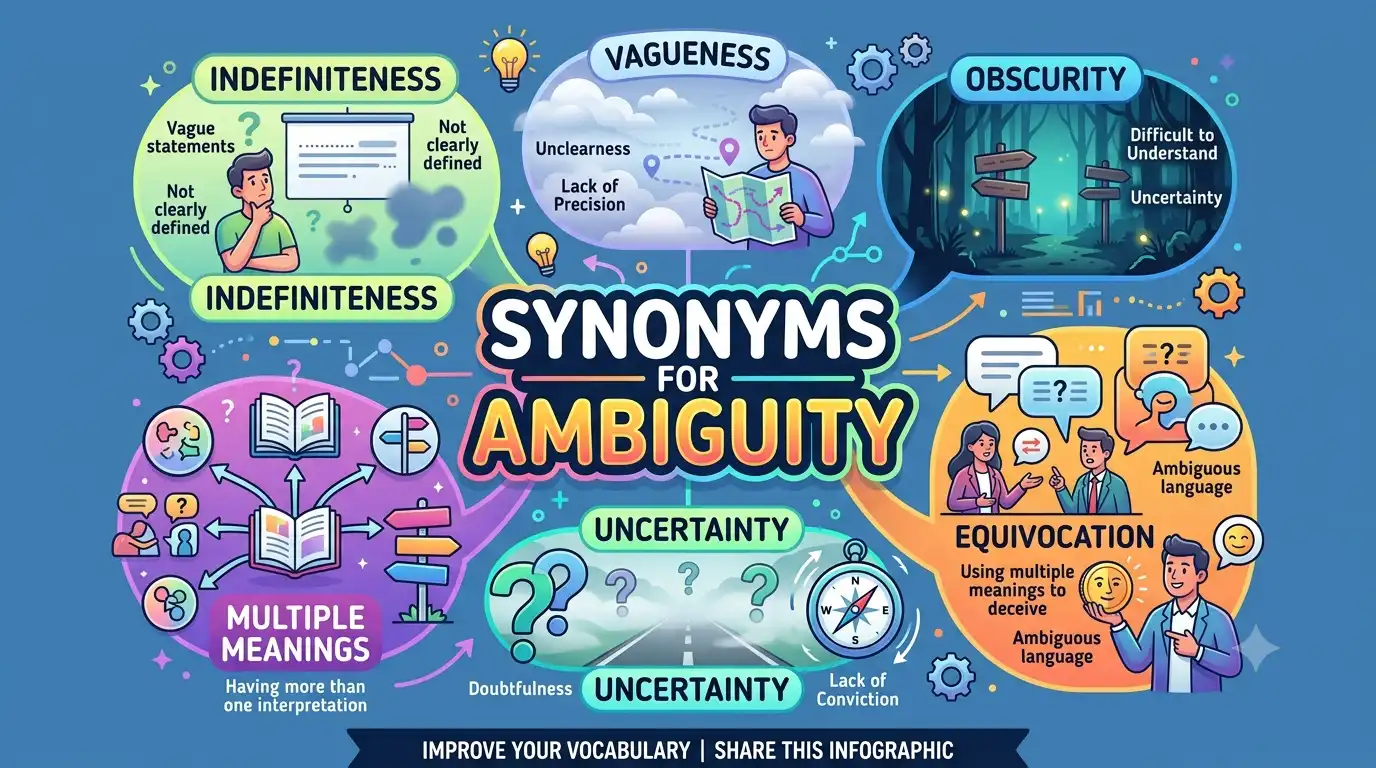
Finding great synonyms for ambiguity helps you write better and clearer sentences. When you use the right synonyms for ambiguity, people understand your true message much faster. Exploring these synonyms for ambiguity makes your words sharp and easy to read.
Imagine reading a drawn map that tells you to turn near the big tree. But you look up and see five big trees on that same road. That lost feeling is exactly what ambiguity is. The map is not clear at all. In simple English, ambiguity means something has more than one meaning and causes confusion. It means a lack of clear detail.
Learning these vocabulary options is very useful for:
- Students: Write clear essays and get better grades.
- Bloggers: Keep your readers happy with simple posts.
- Content Writers: Make your web text easy to scan.
- Daily English Users: Avoid mix-ups in your chats.
“Clarity is the most important thing in communication.” – Unknown
“Confusion is a word we have invented for an order which is not understood.” – Henry Miller
Technical & Linguistic Breakdown of “Ambiguity”
Connotative Meaning
The word ambiguity carries a neutral but often frustrating feeling. It shows that a rule, idea, or picture lacks clear limits. It means people must guess the real truth.
Etymology of “Ambiguity”
- Latin Root: Comes from ambiguitas, meaning a double meaning.
- Prefix Base: Ambi- means both ways or around.
- English Entry: Entered the English language in the early 1400s.
Pronunciation (IPA)
- US Pronunciation: /ˌæmbɪˈɡjuːəti/
- UK Pronunciation: /ˌæmbɪˈɡjuːəti/
Syllables & Structure
- Syllables: 5 Syllables (am – bi – gu – i – ty)
- Stress Pattern: Primary stress on the third syllable (am-bi-GU-i-ty).
Affixation Pattern
- Base Word: Ambiguous (Adjective)
- Suffix: -ity (Turns the word into a Noun)
- Plural: Ambiguities
Quick Comparison Table of Key Synonyms
| Keyword | Meaning | Usage Type | Context |
| Vagueness | Lacking clear detail | Casual / Formal | Rules, ideas, speech |
| Obscurity | Hard to understand | Formal | Old books, dark ideas |
| Uncertainty | Not sure about facts | Emotional / Formal | Future plans, choices |
| Confusion | A state of mixed ideas | Casual | Classes, messy rooms |
| Doubt | A feeling of not believing | Personal | Trust, scary news |
| Mystery | A secret not yet solved | Playful / Story | Books, movies, games |
| Fuzziness | Blurry or not sharp | Casual | Pictures, old memories |
| Equivocation | Hiding the clear truth | Professional | Politics, legal talks |
50 Best Synonyms for Ambiguity
1. Vagueness
- Pronunciation: US: /ˈveɪɡnəs/ | UK: /ˈveɪɡnəs/
- Meaning: It means lacking detail or clear shape.
- Examples:
- The rule has too much vagueness.
- We dislike the vagueness of his plan.
2. Obscurity
- Pronunciation: US: /əbˈskjʊrəti/ | UK: /əbˈskjʊərəti/
- Meaning: It means something is very hard to understand.
- Examples:
- The old poem has a lot of obscurity.
- He spoke with dark obscurity.
3. Uncertainty
- Pronunciation: US: /ʌnˈsɜːrtnti/ | UK: /ʌnˈsɜːtnti/
- Meaning: It is a state of not knowing the true facts.
- Examples:
- There is uncertainty about the weather.
- She felt uncertainty before the big test.
4. Confusion
- Pronunciation: US: /kənˈfjuːʒn/ | UK: /kənˈfjuːʒn/
- Meaning: It is a messy state of mixed-up ideas.
- Examples:
- The fast changes caused great confusion.
- He looked around in total confusion.
5. Doubt
- Pronunciation: US: /daʊt/ | UK: /daʊt/
- Meaning: It is a feeling of not being sure or believing.
- Examples:
- I have doubt about his crazy story.
- There is no doubt that she won.
6. Mystery
- Pronunciation: US: /ˈmɪstəri/ | UK: /ˈmɪstəri/
- Meaning: It is a secret puzzle that no one knows yet.
- Examples:
- The missing toy is a huge mystery.
- We love reading a good mystery.
7. Haziness
- Pronunciation: US: /ˈheɪzinəs/ | UK: /ˈheɪzinəs/
- Meaning: It means being cloudy and hard to see clearly.
- Examples:
- The haziness in the sky hides the sun.
- There is haziness in my old memory.
8. Fuzziness
- Pronunciation: US: /ˈfʌzinəs/ | UK: /ˈfʌzinəs/
- Meaning: It means a blurry shape or unclear thought.
- Examples:
- The photo has too much fuzziness.
- I hate the fuzziness of these instructions.
9. Blur
- Pronunciation: US: /blɜːr/ | UK: /blɜː/
- Meaning: It is a shape that you cannot see sharply.
- Examples:
- The fast car was just a blur.
- The ink turned into a dark blur.
10. Opacity
- Pronunciation: US: /oʊˈpæsəti/ | UK: /əʊˈpæsəti/
- Meaning: It means you cannot see through it well.
- Examples:
- The window glass has thick opacity.
- The opacity of his talk was bad.
11. Murkiness
- Pronunciation: US: /ˈmɜːrkinəs/ | UK: /ˈmɜːkinəs/
- Meaning: It means being dark, dirty, and very unclear.
- Examples:
- The murkiness of the pond is scary.
- We hate the murkiness of this legal paper.
12. Equivocation
- Pronunciation: US: /ɪˌkwɪvəˈkeɪʃn/ | UK: /ɪˌkwɪvəˈkeɪʃn/
- Meaning: It is using tricky words to hide the real truth.
- Examples:
- The mayor used equivocation to dodge the question.
- Stop your equivocation and answer me.
13. Indecision
- Pronunciation: US: /ˌɪndɪˈsɪʒn/ | UK: /ˌɪndɪˈsɪʒn/
- Meaning: It is the inability to make a firm choice.
- Examples:
- His indecision cost us a lot of time.
- She was stuck in long indecision.
14. Inexactness
- Pronunciation: US: /ˌɪnɪɡˈzæktnəs/ | UK: /ˌɪnɪɡˈzæktnəs/
- Meaning: It means not being perfectly right or precise.
- Examples:
- The inexactness of the math is a problem.
- We fixed the inexactness in the map.
15. Suspense
- Pronunciation: US: /səˈspens/ | UK: /səˈspens/
- Meaning: It is the nervous feeling of waiting for an unknown answer.
- Examples:
- The movie kept us in high suspense.
- I cannot handle this scary suspense.
16. Inaccuracy
- Pronunciation: US: /ɪnˈækjərəsi/ | UK: /ɪnˈækjərəsi/
- Meaning: It is a mistake or a detail that is wrong.
- Examples:
- We found an inaccuracy in the bill.
- This report has a big inaccuracy.
17. Looseness
- Pronunciation: US: /ˈluːsnəs/ | UK: /ˈluːsnəs/
- Meaning: It means not being tight or perfectly exact.
- Examples:
- The looseness of the rules helps us play.
- I noticed the looseness in his story.
18. Paradox
- Pronunciation: US: /ˈpærədɑːks/ | UK: /ˈpærədɒks/
- Meaning: It is a statement that seems to fight against itself.
- Examples:
- The time travel movie is a paradox.
- It is a paradox that less is more.
19. Inconsistency
- Pronunciation: US: /ˌɪnkənˈsɪstənsi/ | UK: /ˌɪnkənˈsɪstənsi/
- Meaning: It means things do not match or stay the same.
- Examples:
- There is an inconsistency in his alibi.
- I hate the inconsistency of this internet speed.
20. Guesswork
- Pronunciation: US: /ˈɡeswɜːrk/ | UK: /ˈɡeswɜːk/
- Meaning: It is trying to find an answer without pure facts.
- Examples:
- Finding the key was pure guesswork.
- We need facts, not blind guesswork.
21. Hesitation
- Pronunciation: US: /ˌhezɪˈteɪʃn/ | UK: /ˌhezɪˈteɪʃn/
- Meaning: It is a short pause because you feel unsure.
- Examples:
- He spoke without any hesitation.
- I saw a brief hesitation in her eyes.
22. Bafflement
- Pronunciation: US: /ˈbæflmənt/ | UK: /ˈbæflmənt/
- Meaning: It is a state of being totally confused.
- Examples:
- The hard puzzle caused great bafflement.
- He stared at the broken car in bafflement.
23. Perplexity
- Pronunciation: US: /pərˈpleksəti/ | UK: /pəˈpleksəti/
- Meaning: It is a feeling of being very confused and worried.
- Examples:
- The strange letter brought deep perplexity.
- She frowned in total perplexity.
24. Bewilderment
- Pronunciation: US: /bɪˈwɪldərmənt/ | UK: /bɪˈwɪldəmənt/
- Meaning: It is extreme confusion from too many strange things.
- Examples:
- The loud noises added to our bewilderment.
- He shook his head in sad bewilderment.
25. Complexity
- Pronunciation: US: /kəmˈpleksəti/ | UK: /kəmˈpleksəti/
- Meaning: It means having many tricky and mixed parts.
- Examples:
- The complexity of the brain is amazing.
- We removed the complexity from the form.
“The beauty of a word is in its clear meaning.” – Unknown
26. Complication
- Pronunciation: US: /ˌkɑːmplɪˈkeɪʃn/ | UK: /ˌkɒmplɪˈkeɪʃn/
- Meaning: It is a new problem that makes a task harder.
- Examples:
- The rain added a complication to the trip.
- This is a silly complication we do not need.
27. Riddle
- Pronunciation: US: /ˈrɪdl/ | UK: /ˈrɪdl/
- Meaning: It is a tricky word game or a puzzling question.
- Examples:
- The clown told a funny riddle.
- Life can feel like a giant riddle.
28. Enigma
- Pronunciation: US: /ɪˈnɪɡmə/ | UK: /ɪˈnɪɡmə/
- Meaning: It is a person or thing that is very mysterious.
- Examples:
- The silent man was a total enigma.
- How the magic trick works is an enigma.
29. Secret
- Pronunciation: US: /ˈsiːkrət/ | UK: /ˈsiːkrət/
- Meaning: It is information that you keep hidden from others.
- Examples:
- I will tell you a quiet secret.
- Keep the birthday party a safe secret.
30. Shadow
- Pronunciation: US: /ˈʃædoʊ/ | UK: /ˈʃædəʊ/
- Meaning: It is a dark area or a hint of something unclear.
- Examples:
- A shadow of doubt crossed his mind.
- The truth is hidden in the shadow.
31. Trickiness
- Pronunciation: US: /ˈtrɪkinəs/ | UK: /ˈtrɪkinəs/
- Meaning: It means being hard to handle or very clever.
- Examples:
- The trickiness of the knot was annoying.
- I enjoy the trickiness of this video game.
32. Indefiniteness
- Pronunciation: US: /ɪnˈdefɪnətnəs/ | UK: /ɪnˈdefɪnətnəs/
- Meaning: It means having no exact limits or sure details.
- Examples:
- The indefiniteness of the rules hurts the game.
- We dislike the indefiniteness of her reply.
33. Indistinctness
- Pronunciation: US: /ˌɪndɪˈstɪŋktnəs/ | UK: /ˌɪndɪˈstɪŋktnəs/
- Meaning: It means you cannot see or hear it sharply.
- Examples:
- The indistinctness of the voice made it hard to hear.
- The fog caused an indistinctness of shapes.
34. Question
- Pronunciation: US: /ˈkwestʃən/ | UK: /ˈkwestʃən/
- Meaning: It is an issue or a doubt you want answered.
- Examples:
- There is a big question about the money.
- She asked a polite question.
35. Problem
- Pronunciation: US: /ˈprɑːbləm/ | UK: /ˈprɒbləm/
- Meaning: It is a hard matter that needs a good fix.
- Examples:
- The broken tire is a real problem.
- Let us solve this math problem.
36. Dilemma
- Pronunciation: US: /dɪˈlemə/ | UK: /dɪˈlemə/
- Meaning: It is a tough choice between two bad options.
- Examples:
- He faced a dilemma about his job.
- What a terrible dilemma to be in.
37. Quandary
- Pronunciation: US: /ˈkwɑːndəri/ | UK: /ˈkwɒndəri/
- Meaning: It is a hard state of doubt over what to do.
- Examples:
- I am in a quandary about what to wear.
- The team is in a deep quandary.
38. Muddle
- Pronunciation: US: /ˈmʌdl/ | UK: /ˈmʌdl/
- Meaning: It is an untidy and confused state of things.
- Examples:
- My thoughts are in a messy muddle.
- The files were a complete muddle.
39. Tangle
- Pronunciation: US: /ˈtæŋɡl/ | UK: /ˈtæŋɡl/
- Meaning: It is a twisted mass of things or bad ideas.
- Examples:
- The dog’s hair was in a big tangle.
- The legal papers were a sad tangle.
40. Fog
- Pronunciation: US: /fɑːɡ/ | UK: /fɒɡ/
- Meaning: It is a state of thick mental confusion.
- Examples:
- My sleepy brain was in a fog.
- We lifted the fog off the project.
41. Cloud
- Pronunciation: US: /klaʊd/ | UK: /klaʊd/
- Meaning: It is something that blocks the clear truth.
- Examples:
- A cloud of worry hung over him.
- Do not let anger cloud your choices.
42. Unknown
- Pronunciation: US: /ˌʌnˈnoʊn/ | UK: /ˌʌnˈnəʊn/
- Meaning: It is a thing that nobody has discovered yet.
- Examples:
- The deep ocean is a scary unknown.
- Fear of the unknown makes us hide.
43. Catch
- Pronunciation: US: /kætʃ/ | UK: /kætʃ/
- Meaning: It is a hidden trick or hard problem in a plan.
- Examples:
- The free car must have a catch.
- Did you find the catch in the deal?
44. Puzzle
- Pronunciation: US: /ˈpʌzl/ | UK: /ˈpʌzl/
- Meaning: It is a game or a tricky thing to figure out.
- Examples:
- The lost dog is a sad puzzle.
- I like to solve a picture puzzle.
45. Dimness
- Pronunciation: US: /ˈdɪmnəs/ | UK: /ˈdɪmnəs/
- Meaning: It means lacking bright light or sharp ideas.
- Examples:
- The dimness of the room made me sleepy.
- His eyes showed a tired dimness.
46. Double meaning
- Pronunciation: US: /ˈdʌbl ˈmiːnɪŋ/ | UK: /ˈdʌbl ˈmiːnɪŋ/
- Meaning: It is a word or joke that has two messages.
- Examples:
- The funny song uses a double meaning.
- Her joke had a clever double meaning.
47. Cloudiness
- Pronunciation: US: /ˈklaʊdinəs/ | UK: /ˈklaʊdinəs/
- Meaning: It is a state of not being clear or bright.
- Examples:
- The cloudiness in the glass is dirt.
- There is cloudiness in his sad thoughts.
48. Formlessness
- Pronunciation: US: /ˈfɔːrmləsnəs/ | UK: /ˈfɔːmləsnəs/
- Meaning: It means having no solid shape or clear edge.
- Examples:
- The ghost had a scary formlessness.
- The pure formlessness of the clay is neat.
49. Inconclusiveness
- Pronunciation: US: /ˌɪnkənˈkluːsɪvnəs/ | UK: /ˌɪnkənˈkluːsɪvnəs/
- Meaning: It means not leading to a firm ending or proof.
- Examples:
- The inconclusiveness of the test was sad.
- We hate the inconclusiveness of this study.
50. Mess
- Pronunciation: US: /mes/ | UK: /mes/
- Meaning: It is a highly dirty or very confused situation.
- Examples:
- His sad story was a huge mess.
- Clean up this room’s dirty mess.
Antonyms of “Ambiguity”
Learning the direct opposites of ambiguity helps you talk about facts and clear things.
- Clarity: Pure clearness and easy to understand.
- Certainty: A strong belief that a fact is 100% true.
- Exactness: Being perfectly right with zero mistakes.
- Precision: High detail and perfect sharpness.
- Clearness: Easy to see, hear, or read.
- Truth: The real and open facts of a matter.
Prototype Meaning and Categorization of “Ambiguity”
To master these words, we split them into written categories based on where they fit.
1. Lack of Detail (Visual and Idea)
These words show when something is blurry, dark, or has weak edges.
- Core Focus: Blurry shapes and missing facts.
- Words: Vagueness, fuzziness, blur, haziness, dimness, formlessness, cloudiness, opacity.
2. Double Meanings (Words and Truth)
These words happen when a person uses tricky talk or hides facts.
- Core Focus: Hiding the truth or saying two things at once.
- Words: Equivocation, double meaning, trickiness, catch, shadow.
3. Mental Confusion (Thoughts and Feelings)
These words show how you feel inside when you do not know the answer.
- Core Focus: Feeling lost, worried, or stuck.
- Words: Confusion, doubt, uncertainty, indecision, hesitation, quandary, dilemma.
4. Puzzles and Mysteries (Events and Things)
These words describe events that are very strange or hard to figure out.
- Core Focus: Secrets and hard problems.
- Words: Mystery, puzzle, riddle, enigma, complexity, unknown.
Frequently Asked Questions (FAQs)
1. What is the best synonym for ambiguity?
The best words are vagueness for rules, and uncertainty for feelings.
2. Is ambiguity a bad thing?
Not always. In poetry, ambiguity is beautiful. In law, ambiguity is bad.
3. What is the difference between ambiguity and confusion?
Ambiguity is the tricky thing itself. Confusion is how you feel about it.
4. Can ambiguity be used in a fun way?
Yes. Jokes, magic tricks, and funny stories use it to trick your mind.
5. Why do politicians use equivocation?
They use it to avoid giving a simple “yes” or “no” answer.
6. Does a double meaning count as ambiguity?
Yes. A double meaning causes you to guess which meaning is true.
Conclusion
Learning top synonyms for ambiguity improves your reading, writing, and daily talking. Good writing depends on choosing the exact right word. When you swap an old word for a sharp synonym, your essays and blogging posts sound much smarter. Your speaking communication grows stronger. Readers trust writers who use clear and easy words.
We encourage you to practice these new vocabulary choices today. Try using them in your work emails. Put them in your school essays. Use them during daily conversations with friends. Choosing strong words removes the fog from your sentences. It helps people know exactly what you want to say. Start with simple words like vagueness or mystery, and watch your language skills grow.
“Good words are worth much and cost little.” – George Herbert
“The most valuable of all talents is that of never using two words when one will do.” – Thomas Jefferson

Robert Hayes is an ESL educator and curriculum developer with over nine years of experience teaching English to beginners and intermediate learners across multiple countries ( Biography ).