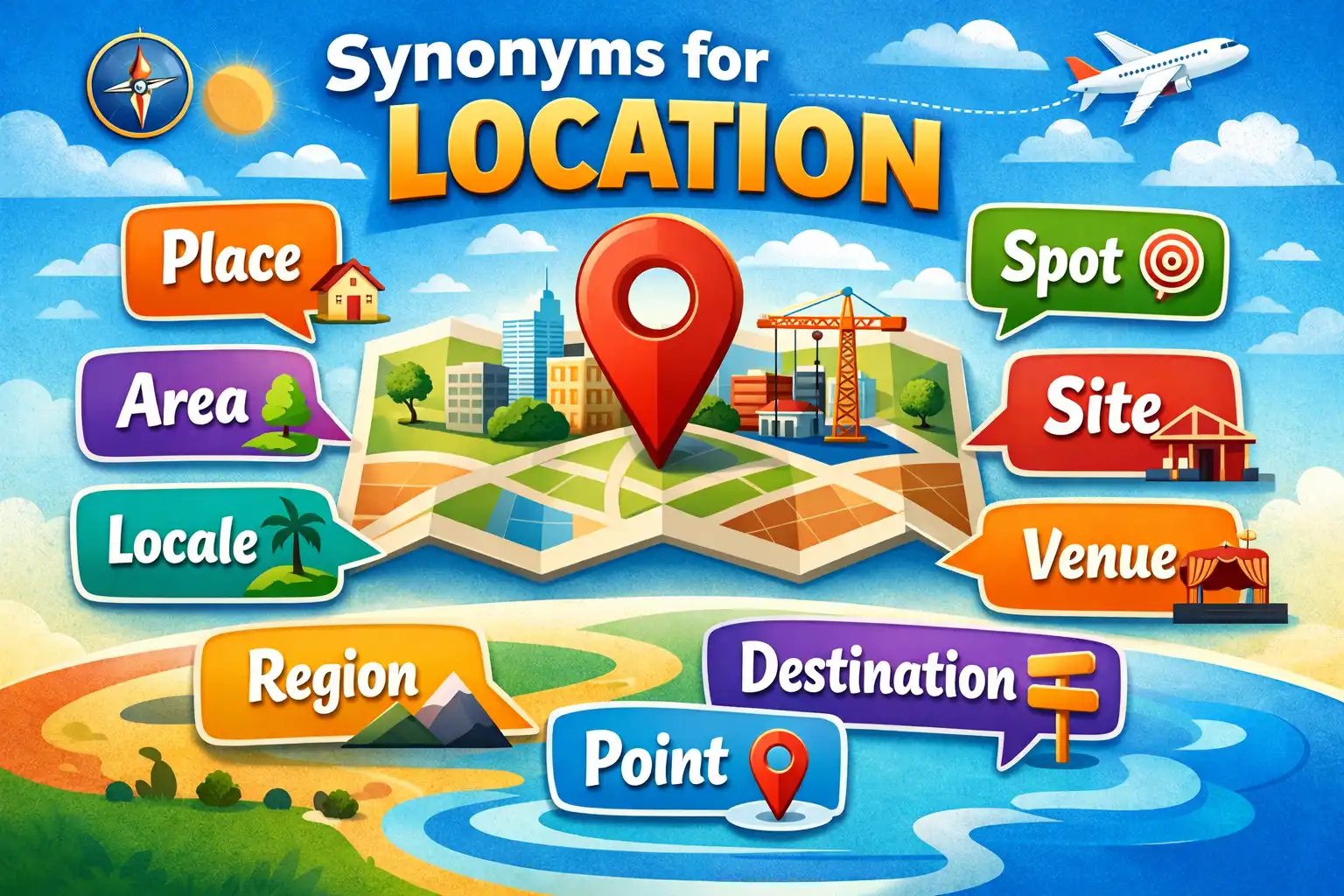
Finding the right words can transform your writing from boring to brilliant. When you look for synonyms for location, you are searching for alternative words that mean a specific place, position, or area where something exists or happens. Utilizing dynamic synonyms for location allows you to avoid repeating the same word over and over again, making your essays, stories, and business emails much more engaging. Imagine describing a hidden tropical beach, a bustling corporate office, and a tiny dot on a map all using the word “location”—it quickly loses its spark. By learning various synonyms for location, you gain the power to paint precise mental pictures for your readers.
Consider a real-life example: a real estate agent trying to sell a beautiful house. If they keep saying, “This is a great location because of the location,” buyers will lose interest. But if they say, “This is a prime spot nestled in a quiet neighborhood,” the description comes alive. In very simple terms, a location is just where something is. Learning different ways to say this word is incredibly useful for everyone. Students can get higher marks on their essays by using varied vocabulary. Bloggers and content writers can keep readers hooked on their pages longer, which helps with search engine rankings. Daily English users can express themselves more clearly and confidently in casual conversations.
“Words are the clothing of our thoughts; choosing the right outfit changes how the world sees your ideas.”
“A precise word does not just state a fact; it creates a vivid world in the mind of the reader.”
Word Profile: Location
Connotative Meaning
While the literal definition of location is simply a geographic point or position, its emotional and cultural connotations often imply stability, identity, access, and value. In business, it connotes success (“location, location, location”), while in personal life, it often implies safety, belonging, or adventure.
Etymology
- Origin: Derived from the Latin word locatio, meaning “a placing” or “a leasing.”
- Root Word: Locare, which means “to place.”
- Historical Entry: Entered the English language in the late 16th century initially as a legal term for leasing or hiring out.
Pronunciation, Syllables, & Affixation
- US Pronunciation (IPA): /loʊˈkeɪʃən/
- UK Pronunciation (IPA): /ləʊˈkeɪʃən/
- Syllables: lo-ca-tion (3 syllables)
- Affixation Pattern: Root word locate (verb) + suffix -ion (used to form nouns showing an action or condition).
Comparison Table of Key Alternatives
| Keyword | Meaning | Usage Type | Context |
| Location | A specific place or position | Professional / Neutral | Workplace, geography, real estate |
| Place | An area or building used for something | Casual / Neutral | Daily use, home life, socializing |
| Spot | A small, specific area | Casual | Friendships, travel, hobbies |
| Site | A piece of land where something is built | Professional | Construction, history, web development |
| Venue | A place where an organized event happens | Professional / Formal | Weddings, concerts, business meetings |
| Position | Where something is placed compared to others | Formal | Science, sports, logistics |
“Language is a map of spatial awareness; changing the name of the destination alters the entire journey.”
50 Synonyms for Location
1. Place
- Pronunciation: US: /pleɪs/ | UK: /pleɪs/
- Meaning: An area, spot, or building that is used for something.
- Examples:
- This is a nice place to eat lunch.
- I know a quiet place where we can study.
2. Spot
- Pronunciation: US: /spɑːt/ | UK: /spɒt/
- Meaning: A specific small area or location.
- Examples:
- We found a great spot for our picnic.
- This is the exact spot where I lost my keys.
3. Site
- Pronunciation: US: /saɪt/ | UK: /saɪt/
- Meaning: A piece of land where something is being built or where an event happened.
- Examples:
- The workers are building a school at this site.
- We visited the site of the old castle.
4. Venue
- Pronunciation: US: /ˈvenjuː/ | UK: /ˈvenjuː/
- Meaning: A place where people gather for an organized event like a concert or wedding.
- Examples:
- The band chose a large stadium as their concert venue.
- What is the venue for the business meeting?
5. Position
- Pronunciation: US: /pəˈzɪʃən/ | UK: /pəˈzɪʃən/
- Meaning: The exact place where someone or something is located in relation to other things.
- Examples:
- The ship radioed its exact position to the coast guard.
- Please hold the camera in a steady position.
6. Situation
- Pronunciation: US: /ˌsɪtʃuˈeɪʃən/ | UK: /ˌsɪtʃuˈeɪʃən/
- Meaning: The location of a place relative to its surroundings.
- Examples:
- The hotel has a beautiful situation overlooking the blue ocean.
- The town’s geographic situation makes it safe from floods.
7. Locality
- Pronunciation: US: /loʊˈkæləti/ | UK: /ləʊˈkæləti/
- Meaning: A distinct area, neighborhood, or district.
- Examples:
- Many old trees grow in this specific locality.
- She knows all the best shops in the locality.
8. Point
- Pronunciation: US: /pɔɪnt/ | UK: /pɔɪnt/
- Meaning: A precise dot or spot on a map or surface.
- Examples:
- Meet me at this point on the trail.
- The map shows the highest point of the mountain.
9. Area
- Pronunciation: US: /ˈeriə/ | UK: /ˈeəriə/
- Meaning: A region or part of a town, country, or world.
- Examples:
- There is a playground in our area.
- It rains a lot in this area of the country.
10. Region
- Pronunciation: US: /ˈriːdʒən/ | UK: /ˈriːdʒən/
- Meaning: A large part of a country or the world that is different from others.
- Examples:
- This region is famous for its sweet apples.
- It gets very cold in the northern region.
11. Zone
- Pronunciation: US: /zoʊn/ | UK: /zəʊn/
- Meaning: An area that has a special use or rules.
- Examples:
- You cannot park your car in this zone.
- Keep quiet because this is a school zone.
12. Sector
- Pronunciation: US: /ˈsektər/ | UK: /ˈsektə/
- Meaning: A separate part of an area or district.
- Examples:
- The army guarded the southern sector of the city.
- We walked through the residential sector of the town.
13. Coordinates
- Pronunciation: US: /koʊˈɔːrdənəts/ | UK: /kəʊˈɔːdɪnəts/
- Meaning: A set of numbers that show the exact position on a map.
- Examples:
- Type the coordinates into your phone map.
- The rescue team found the boat using GPS coordinates.
14. Address
- Pronunciation: US: /ˈædres/ | UK: /əˈdres/
- Meaning: The numbers and words that tell where a building is.
- Examples:
- Please write your home address on this paper.
- I do not know the address of the new library.
15. Whereabouts
- Pronunciation: US: /ˈwerəbaʊts/ | UK: /ˈweərəbaʊts/
- Meaning: The general area where a person or thing is.
- Examples:
- The police are looking for the thief’s whereabouts.
- Do you know the whereabouts of my glasses?
16. Quarter
- Pronunciation: US: /ˈkwɔːrtər/ | UK: /ˈkwɔːtə/
- Meaning: A part of a town or city where a certain group lives or works.
- Examples:
- We visited the historic French quarter today.
- Artists love to live in that quarter of the city.
17. Setting
- Pronunciation: US: /ˈsetɪŋ/ | UK: /ˈsetɪŋ/
- Meaning: The surroundings or place where something is set or happens.
- Examples:
- The old house was in a beautiful forest setting.
- The story has a scary setting.
18. Station
- Pronunciation: US: /ˈsteɪʃən/ | UK: /ˈsteɪʃən/
- Meaning: A designated place where someone stands, works, or waits.
- Examples:
- The guard did not leave his station all night.
- Please wait for me at the bus station.
19. Post
- Pronunciation: US: /poʊst/ | UK: /pəʊst/
- Meaning: A place where a soldier or worker is stationed.
- Examples:
- The soldier walked back to his watch post.
- She stayed at her post until help arrived.
20. Destination
- Pronunciation: US: /ˌdestɪˈneɪʃən/ | UK: /ˌdestɪˈneɪʃən/
- Meaning: The final place where someone or something is going.
- Examples:
- It took five hours to reach our destination.
- Hawaii is a popular holiday destination.
21. Plot
- Pronunciation: US: /plɑːt/ | UK: /plɒt/
- Meaning: A small piece of land used for building or gardening.
- Examples:
- My grandfather bought a plot of land to grow vegetables.
- They are building a house on that empty plot.
22. Ground
- Pronunciation: US: /ɡraʊnd/ | UK: /ɡraʊnd/
- Meaning: An area of land used for a specific purpose.
- Examples:
- The children ran out to the sports ground.
- This ground is perfect for camping.
23. Territory
- Pronunciation: US: /ˈterətɔːri/ | UK: /ˈterətəri/
- Meaning: An area of land that belongs to a specific person, animal, or country.
- Examples:
- Wolves will fight to protect their territory.
- This island is a British territory.
24. Neighborhood
- Pronunciation: US: /ˈneɪbərhʊd/ | UK: /ˈneɪbəhʊd/
- Meaning: The area or district around where a person lives.
- Examples:
- I live in a quiet and friendly neighborhood.
- There are many nice parks in our neighborhood.
25. Environment
- Pronunciation: US: /ɪnˈvaɪrənmənt/ | UK: /ɪnˈvaɪrənmənt/
- Meaning: The physical surroundings or conditions in which something exists.
- Examples:
- Fish need a clean water environment to live.
- The office provides a great working environment.
26. Premises
- Pronunciation: US: /ˈpremɪsɪz/ | UK: /ˈpremɪsɪz/
- Meaning: The land and buildings owned by a business or person.
- Examples:
- Smoking is not allowed on the school premises.
- The company moved to new premises down the street.
27. District
- Pronunciation: US: /ˈdɪstrɪkt/ | UK: /ˈdɪstrɪkt/
- Meaning: An area of a country or town that has official borders or features.
- Examples:
- The business district has many tall buildings.
- He works for the local school district.
28. Space
- Pronunciation: US: /speɪs/ | UK: /speɪs/
- Meaning: An empty or open area.
- Examples:
- There is a large space between the two houses.
- I need to find a parking space near the shop.
29. Base
- Pronunciation: US: /beɪs/ | UK: /beɪs/
- Meaning: A main place where people live, work, or start a journey.
- Examples:
- The mountain climbers set up their camp base.
- The company uses London as its main base.
30. Seat
- Pronunciation: US: /siːt/ | UK: /siːt/
- Meaning: A place where a capital, center, or main office sits.
- Examples:
- Washington D.C. is the seat of the government.
- This city is the seat of the whole county.
31. Sector
- Pronunciation: US: /ˈsektər/ | UK: /ˈsektə/
- Meaning: A specific zone or division of an area.
- Examples:
- The map divides the island into a north and south sector.
- The security guards checked every sector of the mall.
32. Placement
- Pronunciation: US: /ˈpleɪsmənt/ | UK: /ˈpleɪsmənt/
- Meaning: The act of putting something in a specific location or position.
- Examples:
- The careful placement of the furniture made the room look bigger.
- The chart shows the correct placement of the labels.
33. Bearings
- Pronunciation: US: /ˈberɪŋz/ | UK: /ˈbeərɪŋz/
- Meaning: Knowledge of your current location or direction.
- Examples:
- I lost my bearings in the dark woods.
- Use a compass to find your bearings.
34. Lot
- Pronunciation: US: /lɑːt/ | UK: /lɒt/
- Meaning: A marked piece of land used for a specific reason.
- Examples:
- Leave your car in the parking lot.
- They are selling the empty lot next to us.
35. Section
- Pronunciation: US: /ˈsekʃən/ | UK: /ˈsekʃən/
- Meaning: A separate part of a larger area or space.
- Examples:
- The kids’ books are in the back section of the library.
- Meet me in the front section of the theater.
36. Track
- Pronunciation: US: /træk/ | UK: /træk/
- Meaning: A path, route, or rough road that leads somewhere.
- Examples:
- Follow this dirt track to find the cabin.
- The train stayed on its track all day.
37. Hub
- Pronunciation: US: /hʌb/ | UK: /hʌb/
- Meaning: The central and most busy location of an area or activity.
- Examples:
- The airport is a major hub for international travel.
- This city is the financial hub of the nation.
38. Core
- Pronunciation: US: /kɔːr/ | UK: /kɔː/
- Meaning: The central or middle point of an area.
- Examples:
- We walked to the very core of the city.
- Dig down to the core of the earth.
39. Domain
- Pronunciation: US: /doʊˈmeɪn/ | UK: /dəʊˈmeɪn/
- Meaning: An area of land that is ruled or owned by one person or group.
- Examples:
- The king ruled over a vast domain.
- Get off my land because this is my private domain.
40. Scene
- Pronunciation: US: /siːn/ | UK: /siːn/
- Meaning: The place where an incident, crime, or story happens.
- Examples:
- The police arrived quickly at the scene of the accident.
- Artists love the beautiful nature scene here.
41. Point of Origin
- Pronunciation: US: /pɔɪnt ʌv ˈɔːrɪdʒɪn/ | UK: /pɔɪnt ɒv ˈɒrɪdʒɪn/
- Meaning: The exact location where something begins or starts.
- Examples:
- Firemen found the point of origin of the big fire.
- Track the letter back to its point of origin.
42. Field
- Pronunciation: US: /fiːld/ | UK: /fiːld/
- Meaning: An open area of land without buildings.
- Examples:
- Cows are eating grass in the green field.
- The kids ran around the playing field.
43. Layout
- Pronunciation: US: /ˈleɪaʊt/ | UK: /ˈleɪaʊt/
- Meaning: The way things are arranged in a space or location.
- Examples:
- I really like the open layout of this house.
- The map shows the factory layout.
44. Berth
- Pronunciation: US: /bɜːrθ/ | UK: /bɜːθ/
- Meaning: A specific parking location for a ship or train.
- Examples:
- The ship pulled slowly into its berth.
- The train stood at its assigned berth.
45. Neighborhood
- Pronunciation: US: /ˈneɪbərhʊd/ | UK: /ˈneɪbəhʊd/
- Meaning: The nearby area around a specific point.
- Examples:
- There are small stores in the neighborhood of the hotel.
- Look for a gas station in this neighborhood.
46. Stand
- Pronunciation: US: /stænd/ | UK: /stænd/
- Meaning: A small location or booth where goods are sold.
- Examples:
- We bought fresh juice at the fruit stand.
- There is a newspaper stand by the station.
47. Milepost
- Pronunciation: US: /ˈmaɪlpoʊst/ | UK: /ˈmaɪlpəʊst/
- Meaning: A sign showing the location distance on a road.
- Examples:
- We stopped to rest at milepost forty.
- The accident happened near the highway milepost.
48. Sector
- Pronunciation: US: /ˈsektər/ | UK: /ˈsektə/
- Meaning: A distinct, structured location or division inside a boundary.
- Examples:
- Move the trucks into the loading sector.
- Each group must clean their own sector.
49. Center
- Pronunciation: US: /ˈsentər/ | UK: /ˈsentə/
- Meaning: The middle point or location of an area.
- Examples:
- Put the vase right in the center of the table.
- We walked around the shopping center.
50. Anchor Point
- Pronunciation: US: /ˈæŋkər pɔɪnt/ | UK: /ˈæŋkə pɔɪnt/
- Meaning: A fixed location used to secure or base other things.
- Examples:
- Tie the rope securely to that heavy anchor point.
- Use this strong wall as your main anchor point.
Antonyms of Location
An antonym is a word that means the opposite of another word. Since location refers to a specific, fixed place where something exists, its antonyms refer to places that do not exist, states of being completely lost, or moving around constantly without staying anywhere.
- Displacement: The state of being moved away from its correct or proper location.
- Nowhere: A place that does not exist; no location at all.
- Motion: The state of moving or changing position rather than staying in one location.
- Disorientation: The state of being lost and not knowing your current location.
Prototype Meaning and Categorization
In linguistics, a prototype is the best, most central example of a category. For the word “location,” the prototype meaning is a fixed, physical point on the Earth’s surface that can be measured with lines or coordinates.
- Primary Category: Spatial Concepts (words dealing with space, distance, and placement).
- Sub-Category: Geographic Nouns (words used to name specific parts of the world or physical terrain).
Frequently Asked Questions (FAQ)
1. What is the difference between “location” and “place”?
While they are close synonyms, location is more formal and refers to a precise geographic point or position. Place is a friendlier, more casual word that includes the emotional feel, buildings, or memories connected to an area.
2. Can “venue” be used as a synonym for any location?
No, venue is specifically used for locations that host organized events, like concerts, sports games, weddings, or business conferences. You would not call your home or a wild forest a venue unless an event is happening there.
3. What does “losing your bearings” mean?
Losing your bearings means you have become confused about your current location and do not know which direction you are facing. It is the opposite of knowing your exact location.
4. Is “site” only used for construction areas?
No, while construction sites are common, the word site can mean any location where an important event happened (like a historical site) or a location on the internet (like a website).
5. Why is “destination” different from a standard location?
A destination is a specific type of location. It is the specific place where someone is traveling to or where a package is being sent. It implies a journey is happening.
6. When should content writers choose “spot” instead of “location”?
Content writers should use spot when they want to sound casual, warm, and inviting. For example, “a secret vacation spot” sounds much more exciting and relaxing than “a secret vacation location.”
Conclusion
Mastering synonyms for location is a simple yet incredibly powerful way to instantly upgrade your communication skills. When you expand your vocabulary with these alternatives, your writing becomes much more descriptive, energetic, and enjoyable to read. Bloggers can use these varied words to create catchy hooks and keep readers engaged, while professional content writers can avoid repetitive phrasing that hurts SEO rankings. For students, swapping basic words for precise terms shows a strong command of the English language, leading to higher grades on essays and reports. Even in daily conversations, using the exact right word helps people understand your thoughts clearly without any confusion.
I encourage you to take action today and start practicing these new words. Try swapping out “location” for terms like spot, venue, or locality in your next casual email to a friend, your next school essay, or during your daily conversations. The more you use them, the more natural they will feel.
“To change your words is to change your reach; a vast vocabulary unlocks doors to new minds.”
“Do not merely speak to be heard; choose your words so carefully that your audience can see exactly what you mean.”

Robert Hayes is an ESL educator and curriculum developer with over nine years of experience teaching English to beginners and intermediate learners across multiple countries ( Biography ).