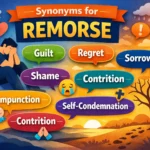
Common synonyms for ‘vengeance’ include:
- Revenge
- Retribution
- Payback
- Justice
- Avengement
- Reciprocation
- Retaliation
- Atonement
Dive deeper into emotional responses by browsing our Emotions category.
Meaning of Vengeance
Vengeance refers to the act of seeking punishment or revenge for a wrong or injury. It often motivated by the desire to retaliate for something perceived as unjust. This term conveys a strong sense of personal justice, typically involving retribution or punishment.
- Example 1: She vowed to seek vengeance for her brother’s betrayal.
- Example 2: His vengeance was swift and unforgiving, targeting everyone involved.
Synonyms Table
| Word | Meaning | Example |
| Revenge | The act of inflicting harm or punishment in return for a wrong | He sought revenge for the injustice done to his family. |
| Retribution | Punishment inflicted on someone as vengeance for a wrong | The criminal received retribution for his harmful actions. |
| Payback | Returning an action or harm done to oneself with similar harm | She gave him a taste of his own medicine as payback. |
| Justice | The maintenance or administration of what is fair and deserved | The legal system was designed to bring justice to the victim. |
| Avengement | The act of avenging a wrong or injury | His avengement was cold and calculated, seeking no mercy. |
| Reciprocation | The act of responding to an action in kind, often with vengeance | The politician demanded reciprocation for the slander. |
| Retaliation | The action of returning harm or injury as a form of revenge | His retaliation against the company was well planned. |
| Atonement | Reparation for a wrong or injury, sometimes driven by revenge | He made atonement for his crimes by facing the consequences. |
Formal and Informal Synonyms
- Formal Synonyms: Terms like retribution and avengement are more formal and often used in legal, philosophical, or literary contexts.
- Informal Synonyms: Words such as payback and revenge more commonly used in everyday conversation, especially in casual settings or among friends.
Context Usage Section
Conversations
In everyday conversations, people are more likely to use synonyms like revenge, payback, or retaliation. These words often used when talking about personal situations or conflicts, usually in less formal settings. For instance, a friend might say, “I’m going to get payback for that prank!” in a lighthearted context. Discover how synonyms for remorse relate to feelings after vengeance.
Writing
In formal writing, especially in literature or historical writing, terms like retribution, avengement, and justice might be use to convey a more serious tone. For example, a novel might describe a character’s journey of vengeance or retribution after a deep betrayal.
Emotional Expression
Synonyms for vengeance can strongly convey a range of emotions such as anger, frustration, or a desire for fairness. For instance, saying “he sought justice for the wrongs done to his family” carries a sense of moral righteousness, while “she took revenge on him for his deceit” conveys a more personal, possibly more negative emotion.
Comparison Section
Vengeance vs. Revenge
While vengeance and revenge are often used interchangeably, vengeance tends to carry a slightly more formal tone, especially in literature and formal contexts. Revenge, on the other hand, is more casual and often used in everyday conversations.
- Vengeance: “The knight sought vengeance for his family’s murder.”
- Revenge: “She plotted her revenge against the man who betrayed her.”
Vengeance vs. Retaliation
Vengeance involves a stronger emotional drive, usually related to a personal offense or injury. Retaliation, however, might be less about emotion and more about simply returning harm for harm, and it can occur in broader situations such as military conflicts.
- Vengeance: “He swore vengeance on his enemies after the attack.”
- Retaliation: “The country’s retaliation was swift after the attack on its embassy.”
Example Sentences
- The hero’s quest for revenge took him across dangerous lands.
- The retribution for his actions came swiftly and without mercy.
- He sought payback for the betrayal he had suffered.
- The court decided that justice must be served, no matter the cost.
- The old man wanted nothing but avengement for the harm done to his family.
- The reciprocation of his insult was immediate, and they began arguing.
- After the corporate scandal, the whistleblower’s retaliation expected but not immediate.
- She found atonement for her sins by helping those she had wronged.
- His need for vengeance consumed him until he found peace.
- The villain’s revenge carried out with brutal efficiency.
- The payback he received was far harsher than he expected.
- Retaliation against the invaders was inevitable, given their atrocities.
- He fought for retribution, demanding justice for the wrongs done.
- The revenge story told across generations, becoming a legend.
- He looked for justice for the victims of the crime.
Common Mistakes
- Confusing revenge with justice: Revenge is often personal and emotional, while justice is typically fair and impartial.
- Overusing payback in formal writing: Payback informal and should be avoided in formal contexts like academic writing or professional settings.
- Using vengeance too casually: Vengeance is a strong term with significant emotional weight. It’s better suited to serious or dramatic contexts, not lighthearted ones.
FAQ
1. Can vengeance be justified in certain situations?
It depends on the context. Vengeance often considered personal, and in many cases, it can escalate conflicts. In legal contexts, justice is preferred over vengeance.
2. Is retribution the same as vengeance?
While similar, retribution tends to focus more on the punishment aspect, often used in legal and moral contexts. Vengeance involves a more emotional, personal drive.
3. Is payback always a bad thing?
Not necessarily. Payback sometimes be seen as justifiable, but it can often be a source of unnecessary conflict when taken to extremes.
Conclusion
In summary, synonyms for vengeance such as revenge, retribution, and payback each have their own nuances. Whether you’re looking to express personal emotions or discussing formal justice, it’s important to choose the right word based on the context. Learn how synonyms for pride can influence motives behind vengeance.

Robert Hayes develops easy-to-understand synonym lists and contextual examples to improve everyday writing.