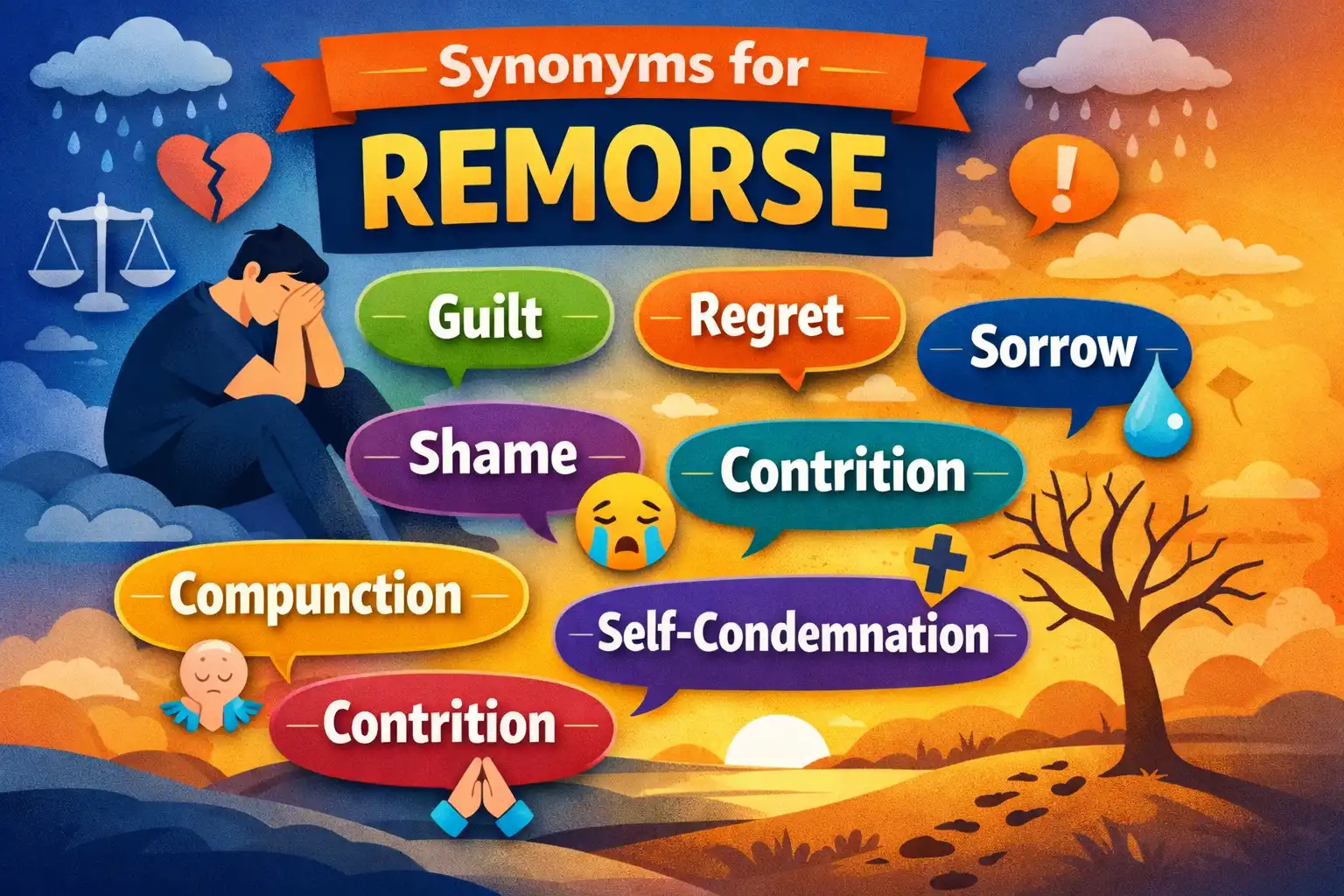
The word remorse is common in daily speech, emotional conversations, and formal writing. It describes a deep feeling of regret after doing something wrong. Learning synonyms helps you express feelings more clearly and naturally in English. Find more emotional insights in the Emotions category for deeper understanding.
Direct Answer
Remorse means a strong feeling of guilt or regret about something you did. Common synonyms include:
- guilt
- regret
- shame
- sorrow
- repentance
- contrition
- penitence
- self-reproach
Meaning of Remorse
Remorse is a deep emotional pain caused by guilt or regret for a past action.
Example:
He felt deep remorse after hurting his friend.
Categories of Synonyms
Emotional discomfort
These words focus on inner guilt and sadness after wrongdoing.
Moral responsibility
These synonyms highlight accepting blame or personal fault.
Formal repentance
These words are often used in religious, legal, or formal writing.
Synonyms Table
| Word | Simple Meaning | Example Sentence |
| guilt | feeling bad for wrongdoing | She carried guilt for years. |
| regret | wishing you acted differently | He felt regret after the argument. |
| shame | painful embarrassment about actions | She felt shame for lying. |
| sorrow | deep sadness | He showed sorrow for his mistake. |
| repentance | desire to correct wrongdoing | His apology showed repentance. |
| contrition | sincere regret | She expressed contrition in court. |
| penitence | regret with desire to change | He lived in penitence. |
| self-reproach | blaming yourself | She spoke with self-reproach. |
Master Synonyms List (Grouped by Level)
Beginner / Simple
guilt
Simple meaning: feeling bad for doing wrong
Example: She felt guilt after breaking the promise.
Informal
regret
Simple meaning: wishing something had not happened
Example: He expressed regret for his words.
Neutral
shame
Simple meaning: painful embarrassment
Example: She lowered her head in shame.
Neutral
Intermediate
sorrow
Simple meaning: deep sadness
Example: He spoke with sorrow about his actions.
Neutral
self-reproach
Simple meaning: blaming yourself
Example: She lived with self-reproach for years.
Formal
Advanced / Formal
contrition
Simple meaning: serious regret
Example: The letter showed true contrition.
Formal
repentance
Simple meaning: regret with desire to improve
Example: His apology reflected repentance.
Formal
penitence
Simple meaning: regret tied to punishment or change
Example: He accepted the decision with penitence.
Formal
Formal vs Informal Synonyms
Simple words like guilt and regret work well in everyday conversation. Formal terms like contrition and penitence appear more in legal, academic, or religious contexts. Choose based on audience and tone. Explore synonyms for compassionate to see how empathy contrasts with remorse.
Real-Life Usage Examples
Conversation:
I still feel remorse about what I said.
Academic writing:
The study explores remorse in criminal behavior.
Business writing:
The company expressed remorse for the error.
Blogging:
She wrote openly about her remorse and growth.
Emotional expression:
His remorse was clear in his voice.
Similar Words Comparison
Remorse vs Guilt
Remorse is deeper and more emotional than guilt.
Example:
He felt guilt after lying.
He felt remorse after betraying trust.
Remorse vs Regret
Regret can be mild. Remorse is intense and moral.
Example:
She regretted missing the meeting.
She felt remorse for hurting someone.
Example Sentences
- He lived with remorse for years.
- Her remorse was honest and visible.
- The judge noted his remorse.
- She apologized with deep remorse.
- Remorse changed his behavior.
- He spoke softly, full of remorse.
- Her letter expressed real remorse.
- They expected signs of remorse.
- Remorse guided his future actions.
- She cried in remorse.
- His remorse helped rebuild trust.
- The story explores guilt and remorse.
- He admitted his remorse openly.
- Remorse followed his mistake.
Common Mistakes
- Using regret when strong moral guilt is needed
→ Choose remorse for serious wrongdoing. - Overusing formal words in casual talk
→ Avoid contrition in everyday speech. - Confusing sadness with remorse
→ Remorse always involves personal responsibility. - Using synonyms without emotional weight
→ Match intensity to the situation.
Tips / Best Practices
- Match tone to the situation
- Choose words based on emotional strength
- Use formal synonyms in writing, not casual chat
- Keep language clear and natural
- Avoid repeating the same word too often
When NOT to Use Remorse
Do not use remorse for small disappointments. It suggests serious moral guilt, not minor mistakes like missing a bus or forgetting homework. Understanding synonyms for judgement helps explain feelings of remorse.
Opposite Words (Antonyms)
- pride
- indifference
- satisfaction
- relief
- confidence
FAQs
What does remorse mean?
A deep feeling of guilt after wrongdoing.
Is remorse formal or informal?
It is neutral and works in both speech and writing.
How can I use it in conversation?
“I feel remorse for what I did.”
What is the best synonym for remorse?
Guilt is the closest everyday synonym.
Can remorse be replaced with regret?
Only when the situation is mild, not moral wrongdoing.
Conclusion
Learning synonyms for remorse improves emotional clarity in speech and writing. It helps you choose words that match tone and seriousness. Strong vocabulary leads to better communication. Understanding synonyms for judgement helps explain feelings of remorse.
Try using 3 new synonyms in your next sentence.

Robert Hayes develops easy-to-understand synonym lists and contextual examples to improve everyday writing.