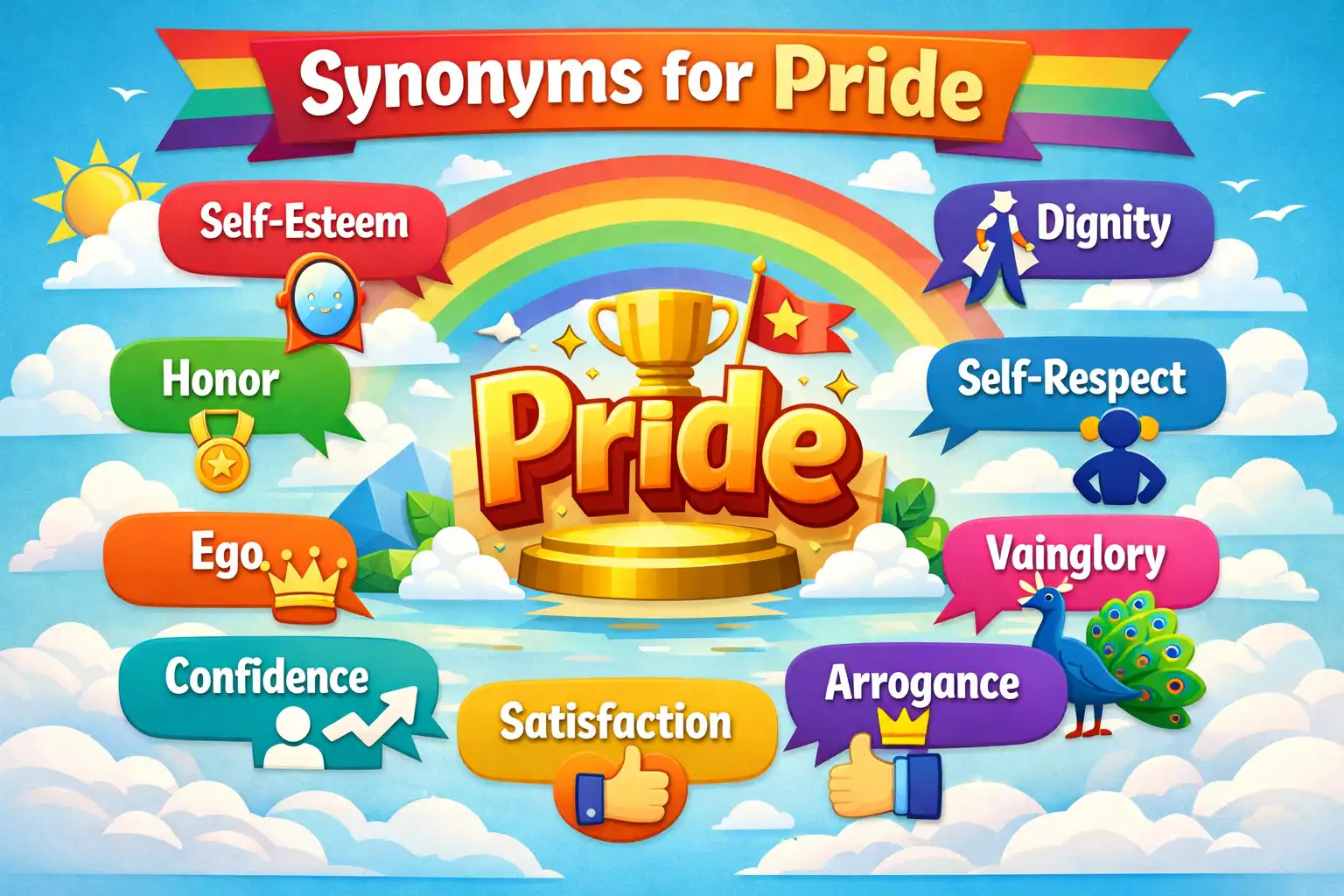
The word pride is common in daily speech, writing, and emotional expression. It describes self-respect or satisfaction in achievements. Learning synonyms helps you express feelings more clearly and avoid repeating the same word. Explore a range of feelings in our Emotions category.
Direct Answer
Pride means a feeling of satisfaction, dignity, or self-respect. Common synonyms include:
- self-respect
- dignity
- honor
- satisfaction
- confidence
- vanity
- ego
Meaning of Pride
Pride is a positive feeling of respect or pleasure about yourself or something you achieved.
Example:
She felt pride after finishing her first marathon.
Categories of Synonyms
Positive Self-Worth
These words describe healthy confidence and respect for oneself.
Excessive Self-Importance
These synonyms suggest too much pride or arrogance.
Achievement Satisfaction
These words focus on pride connected to success or accomplishment.
Synonyms Table
| Word | Simple Meaning | Example Sentence |
| self-respect | respect for yourself | He protects his self-respect in every decision. |
| dignity | calm personal honor | She handled the situation with dignity. |
| honor | strong sense of value | He felt honor representing his country. |
| satisfaction | pleasure from success | She smiled with satisfaction. |
| confidence | belief in ability | His confidence helped him win. |
| vanity | too much concern about image | His vanity was obvious. |
| ego | strong sense of self | His ego was easily hurt. |
Master Synonyms List (Grouped by Level)
Beginner / Simple
self-respect – respect for yourself
She spoke with self-respect and calm confidence. (Neutral)
confidence – belief in your ability
He answered with confidence during the interview. (Neutral)
satisfaction – pleasure after success
She felt satisfaction after solving the problem. (Neutral)
Intermediate
dignity – calm pride and honor
She kept her dignity in a difficult moment. (Formal)
honor – high respect or pride
He carried the award with honor. (Formal)
Advanced / Formal
vanity – excessive pride in appearance
His vanity affected his behavior. (Negative tone)
ego – inflated sense of importance
His ego made teamwork difficult. (Informal/Negative)
Formal vs Informal Synonyms
Formal writing prefers words like dignity and honor. Casual conversation often uses confidence or ego. Choose based on your audience and tone. Compare synonyms for coward to understand the opposite of pride.
Real-Life Usage Examples
Conversation:
I’m proud of you → I admire your confidence.
Academic Writing:
The athlete maintained dignity under pressure.
Business Writing:
The team took satisfaction in meeting deadlines.
Blogging:
Confidence is key to personal growth.
Emotional Expression:
She felt deep self-respect after standing up for herself.
Similar Words Comparison
Pride vs Confidence
Pride is emotional satisfaction.
Confidence is belief in ability.
Example:
She has confidence before the test, but pride after passing.
Pride vs Vanity
Pride can be healthy.
Vanity suggests excessive self-focus.
Example:
Healthy pride motivates growth; vanity blocks learning.
Example Sentences
- He spoke with quiet pride.
- Her dignity impressed everyone.
- They celebrated their success with satisfaction.
- Confidence improved his performance.
- Honor guided his decisions.
- She protected her self-respect.
- His ego caused tension.
- Vanity distracted him from work.
- Pride filled the room.
- She smiled with calm dignity.
- Confidence grows with practice.
- Honor requires responsibility.
- Satisfaction comes from effort.
- Self-respect shapes behavior.
- Pride motivates improvement.
Common Mistakes
- Using vanity when you mean healthy pride
- Confusing ego with confidence
- Overusing pride instead of choosing a precise synonym
- Using formal words in casual conversation
Tips / Best Practices
- Match tone to situation
- Choose words based on context
- Consider formality level
- Prefer clarity over complexity
- Avoid repeating the same synonym too often
When NOT to Use Pride
Do not use pride when describing arrogance or selfish behavior. In those cases, choose vanity or ego instead.
Opposite Words (Antonyms)
- shame
- humility
- insecurity
- embarrassment
- modesty
FAQs
What does pride mean?
It means satisfaction or respect for yourself or achievements.
Is pride formal or informal?
It works in both formal and casual English.
How can I use it in conversation?
Say: “I’m proud of your effort.”
What is the best synonym for pride?
It depends on context; confidence is common.
Can pride be replaced with confidence?
Sometimes, but confidence focuses on ability, not emotion.
Conclusion
Learning synonyms for pride improves writing and speaking. It adds clarity and emotional accuracy. Strong vocabulary helps you communicate better in every situation. See how synonyms for fearless relate to expressions of pride.
Try using 3 new synonyms in your next sentence.

Robert Hayes develops easy-to-understand synonym lists and contextual examples to improve everyday writing.